The move to SAP S/4HANA is accelerating rapidly, driven by the impending end of mainstream maintenance for SAP ECC. Yet, as organisations embark on this journey, they hit a massive roadblock: decades of legacy programming. According to recent ASUG research, 95% of organisations build and run custom code. Furthermore, 44% of SAP customers cite having "too many customisations within our old instance(s)" as their number one S/4HANA migration challenge. Because SAP S/4HANA operates on a new architecture, legacy code cannot simply be "lifted and shifted." This article explains exactly why custom code adaptation is a mandatory technical requirement, explores the severe limitations of relying on a purely manual remediation approach, and details how intelligent automation secures your path forward.
The Technical Reality: Why Legacy Code Breaks in S/4HANA
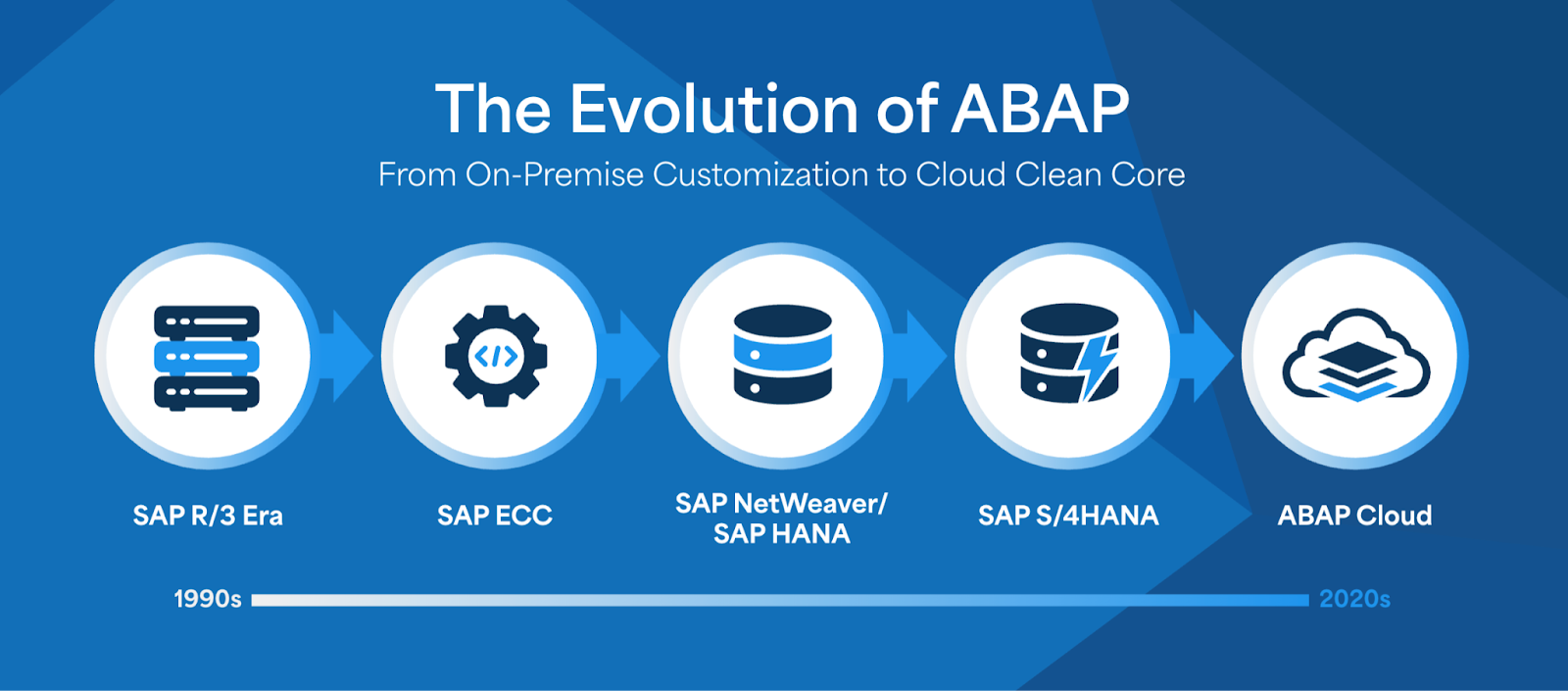
If your organization relies on SAP ECC, your custom code was written for relational databases and older ABAP paradigms. SAP S/4HANA is entirely different. It relies on the in-memory SAP HANA database and a drastically simplified data model.
Because of these fundamental architectural shifts, custom code adaptation is not optional; it is a mandatory prerequisite. If you do not adapt your repository, your legacy programs will experience:
- Incompatibility: Old syntax, such as direct reads/writes to tables that no longer exist in S/4HANA, will cause immediate system dumps.
- Database Errors: Code not adapted for HANA database compliance and Unicode compatibility simply will not compile or run.
- Performance Degradation: Poorly performing legacy code can cripple the speed advantages of the new HANA database if not properly pushed down or optimised.
The Limitations of a Purely Manual Adaptation Approach
Many organizations mistakenly assume they can simply deploy large manual development teams to fix these mandatory issues line by line. However, research and real-world experience warn against this purely manual approach.
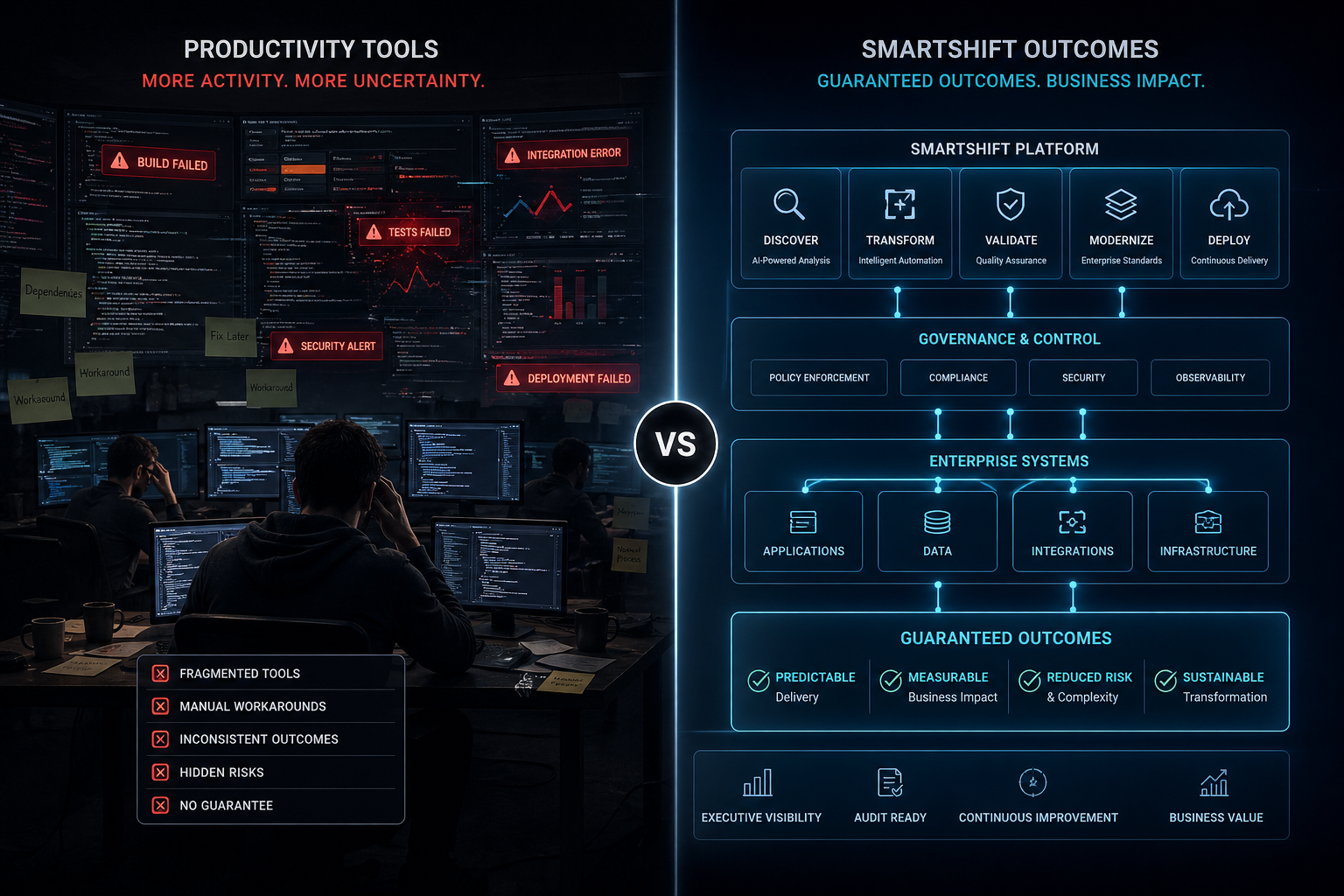
Manual adaptation is incredibly slow, expensive, and labor-intensive. For instance, when JBS Foods initially planned a manual code transformation, they estimated it would take up to 30 expensive ABAP development resources a full nine months to complete. Relying on human labor for millions of lines of code also inherently introduces the risk of human error and inconsistent coding styles.
Furthermore, when teams manually adapt code under tight project deadlines, they typically only have the capacity to fix the most critical errors (Priority 1 and 2) required to get the system to compile. Deeper issues related to security vulnerabilities, performance optimization, and Clean Core standards are often left behind. As a result, your brand-new S/4HANA system instantly inherits the massive technical debt of your legacy ECC system.
3 Steps to a Successful, Automated Adaptation
To achieve a flawless transition, organisations must move away from manual labor and embrace automation. Here is how a successful, data-driven adaptation strategy works:
1. Decommission the Dead Weight First
According to ASUG members, the top piece of advice for a migration is to reduce custom code. Benchmarks show that 40% to 60% of custom code in an average system is technically unused. By analysing production usage data, you can safely decommission this "dead code". Deleting it instantly reduces the volume of code that must be adapted, tested, and maintained.
2. Automate the Remediation
Instead of deploying armies of developers, leverage an Intelligent Automation Platform. Automation can execute mandatory S/4HANA changes, resolve HANA performance issues, and fix security loopholes simultaneously. For example, when consumer goods giant Beiersdorf needed to adapt 5.6 million lines of code (33,000 custom objects), smartShift's automation platform executed the entire transition in just six weeks, fixing 69,000 issues and saving an estimated five months of manual work.
3. Maintain Business Velocity with Automated Dual Maintenance
A major S/4HANA transition can take years, but your business cannot stop innovating. While your legacy code is being adapted for the new S/4HANA project landscape, you must synchronise any new daily changes happening in your live ECC production system. Automated Dual Maintenance compares, merges, and adapts these ongoing changes on the fly, eliminating risky "code freezes" and protecting business velocity.
Comparison: Traditional Approach vs. Automated Code Adaptation
|
Custom Code Remediation Example
|
Without smartShift
|
With smartShift
|
Benefit
|
|
Development Hours
|
24,000 Hours
|
0 Hours
|
100% Reduction
|
|
Project Timeline
|
8 Months
|
3-6 Weeks
|
4X Faster
|
|
Testing Effort
|
12 Weeks
|
2-3 Weeks
|
75% Reduction
|
|
Issue Coverage
|
30-40%
|
100%
|
Future-Proof
|
Conclusion: Automate to Guarantee Success
Custom code adaptation is an unavoidable technical reality of the SAP S/4HANA journey. However, treating it as a massive, manual refactoring exercise will inevitably drain your budget, divert your key talent, and introduce severe operational risks.
By trusting intelligent automation, you ensure your legacy code is fully modernised, secure, and compatible with S/4HANA's architecture, delivered on a guaranteed timeline with zero disruption to your daily operations.
Do not let outdated code stall your digital transformation.
Contact us today to request a Rapid Code Analysis and discover exactly what mandatory adaptations your system requires before you begin your S/4HANA journey.
Gerren Mayne
Regional Vice President with smartShift and SAP Thought Leader with over 25 years of experience working with clients driving value through innovation as they transform their businesses. Having built up an extensive network, I bring together the best of my organisation combined with an extended Partner community. I take an active participation with Industry Analysts as a seat holder, exchanging views and opinions of the evolving business challenges and how clients can drive value through their ERP and Cloud applications.