SAP technical debt is a silent budget drain that complicates S/4HANA migrations and restricts business agility. With 40% to 60% of legacy custom code being technically obsolete, manual maintenance wastes valuable resources. By objectively measuring this debt through automated analysis, organisations can safely decommission dead code, eliminate manual refactoring efforts, and massively accelerate their journey to a Clean Core.
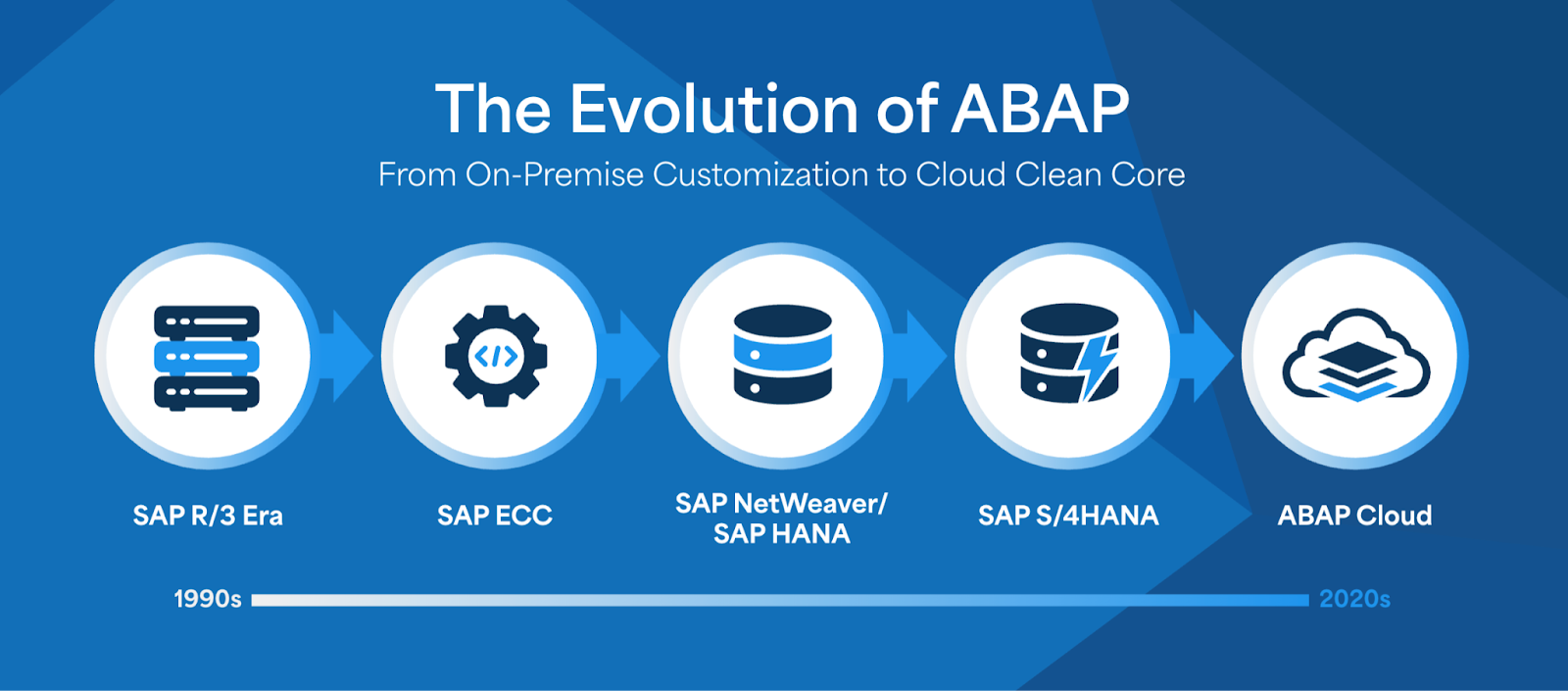
As organizations prepare for SAP S/4HANA, they frequently encounter a massive obstacle: decades of legacy programming. Research shows that 95% of organisations build and run custom code to support unique business processes. Over time, this leads to an average SAP ECC system accumulating around 22,000 custom objects and 2.7 million lines of executable custom code. Hidden within this massive repository are roughly 300,000 technical debt issues spanning performance, security, and stability. Attempting to manage and modernise this codebase through purely manual approaches is too slow, expensive, and risk-prone. This blog explores the true financial impact of SAP technical debt, how to measure it accurately, and why intelligent automation is the only sustainable way to resolve it.
Essential Industry Terms Defined
Before diving into the mechanics of measuring technical debt, let us define a few core concepts:
- SAP Technical Debt: The accumulated cost of maintaining outdated, unoptimised, or obsolete custom ABAP code that no longer aligns with modern SAP standards (such as S/4HANA or Clean Core guidelines).
- Usage Analysis & Decommissioning: The practice of evaluating production usage data (e.g., via SUSG, SCMON, or UPL) to objectively identify and safely remove obsolete or redundant custom code.
The True Cost of SAP Technical Debt
Technical debt is not just an abstract IT problem; it carries hard financial and operational costs that impact the entire business.
1. The Cost of Maintaining "Dead Code"
Between 40% and 60% of custom code in an average SAP system is technically unused. Retaining this obsolete code increases the scope and complexity of any migration or upgrade. Industry estimates suggest that maintaining, testing, and upgrading this unused code costs organizations conservatively between $0.25 and $0.63 per line of code annually.
2. Inflated Testing and Upgrade Efforts
When migrating to S/4HANA, rigorous regression testing is required. Unused and poorly written code unnecessarily inflates this testing effort, taking key workers away from other strategic duties. In fact, 59% of SAP customers cite extensive testing as a top challenge when migrating custom code.
3. Security Vulnerabilities and Poor Performance
Legacy code developed 10 or 20 years ago was built on outdated standards. It often contains security loopholes, such as missing authority checks, and relies on inefficient database queries that cripple the performance benefits of the modern HANA database.
4. The Danger of Manual Remediation
Attempting to resolve technical debt manually requires thousands of hours of expensive labour. Because manual development teams are constrained by time and budget, they typically only fix the most critical Priority 1 (P1) and Priority 2 (P2) issues just to get the system to compile, leaving thousands of lower-priority stability and security issues unresolved.
How to Measure Technical Debt in Custom Code
You cannot fix what you cannot see. Measuring technical debt requires moving beyond basic spreadsheets and adopting a deep, data-driven analysis of your entire repository.
Step 1: Establish Transparency Through "Entry Points"
A flat list of 22,000 objects does not provide actionable insight. You must group technical objects into logical applications or "Entry Points". By mapping data flows, API calls, and database accesses, you gain a true inventory of your applications, allowing you to see exactly which business processes are driving your technical debt.
Step 2: Analyse Usage Data to Identify Dead Weight
The most effective way to reduce technical debt is to delete it. By running a usage analysis using SAP statistical data (such as SUSG or SCMON) over a 13-month period, you can confidently identify which objects are actively used and which can be safely decommissioned.
Step 3: Map to the SAP Clean Core Framework
SAP has introduced a new Level framework (A to D) to classify the quality and upgradeability of custom code. Measuring your debt means evaluating your repository against these tiers:
- Level D (Not Clean Core): Direct modifications, implicit enhancements, or direct table writes.
- Level B & C: Usage of classic APIs and conditional clean core elements.
- Level A (Cloud Ready): The gold standard using released APIs and ABAP Cloud syntax. A proper analysis will show you exactly how many objects reside in Level D and need to be remediated to achieve upgrade stability.
The Solution: Automated vs. Manual Remediation
Once your technical debt is measured, how do you resolve it? Relying on manual approaches exposes your programme to budget overruns and human error.
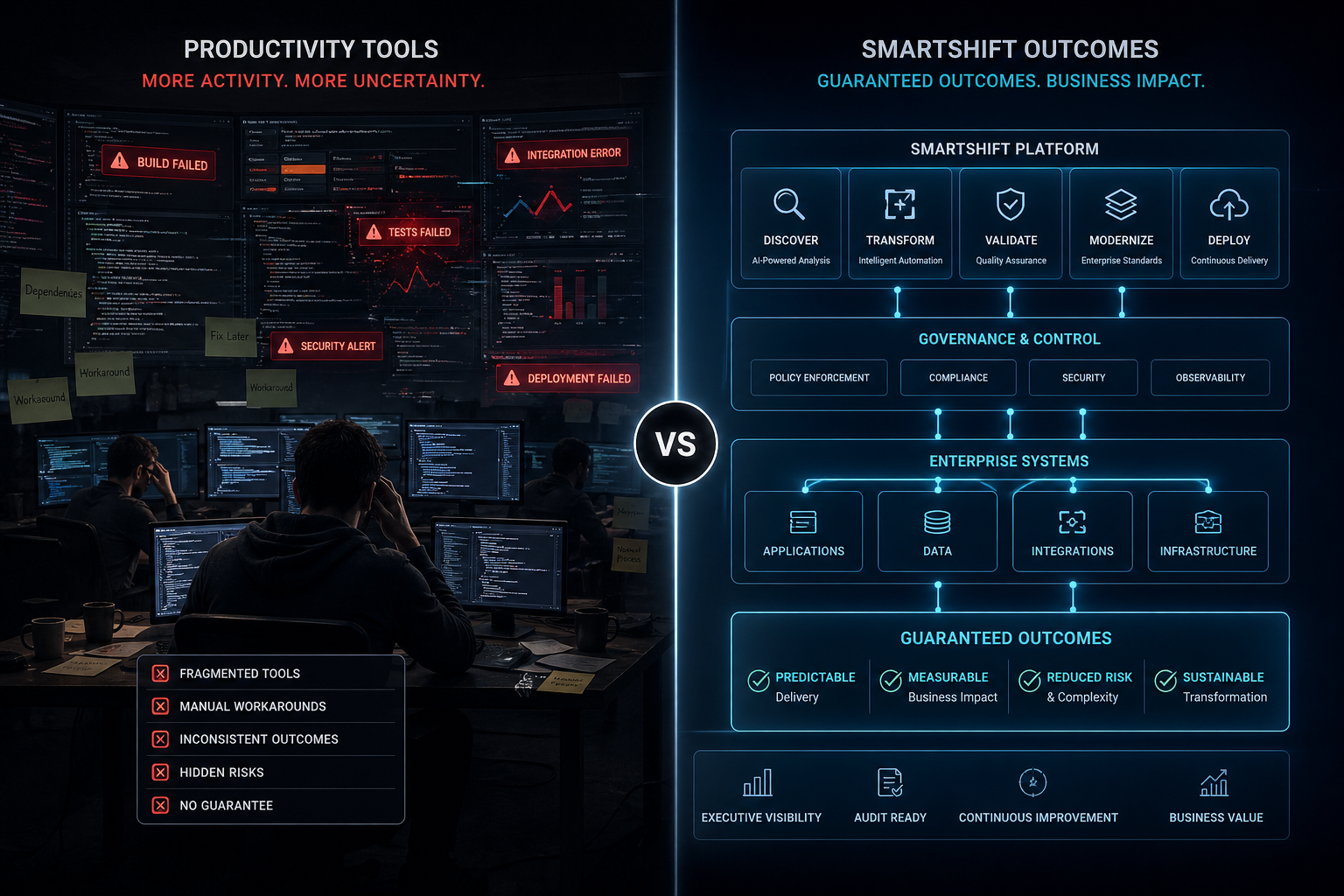
Intelligent automation offers a predictable alternative. Automated platforms analyse and transform the entire codebase in one comprehensive pass, addressing mandatory S/4HANA changes, HANA performance optimisations, and security flaws simultaneously.
|
Metric |
Manual Approach |
smartShift Intelligent Automation |
|
Speed |
Months to years (e.g., 6–10 months) |
Weeks (4x faster) |
|
Issue Coverage |
Often limited to critical P1/P2 issues |
100% comprehensive (P1–P4), including security and performance |
|
Testing Effort |
High risk of human error and regressions |
Massively reduced (99.99% accuracy) |
|
Business Disruption |
High (Requires extended code freezes) |
Zero (Via Automated Dual Maintenance) |
Conclusion: Stop Carrying the Burden of the Past
Technical debt in SAP is not a one-time issue; it is a continuous lifecycle management challenge that erodes value over time. If you do not actively measure and manage it, your organisation will pay for decades-old development decisions in every future upgrade and migration.
Before you commit your internal teams to months of manual refactoring, you need absolute clarity on the size of your technical debt. Contact us today to schedule a Rapid Code Analysis and get a data-driven, automated blueprint for cleaning your core and accelerating your SAP transformation.