Stop letting legacy code manage you.
March 2nd, 2026
5 min read

Automating SAP Custom Code Lifecycle Management with smartShift
SAP custom code lifecycle management is an ongoing discipline. During an S/4HANA migration, version upgrade, M&A event, carve-out, consolidation, or clean core initiative, custom ABAP code still needs visibility, transformation, validation, security, and long-term governance.
Manual custom code management creates avoidable risk. Technical debt accumulates, documentation becomes unreliable, usage patterns change, and business-critical logic becomes harder to understand. smartShift helps enterprises automate SAP custom code analysis, transformation, optimization, validation, decommissioning insights, dual maintenance, and ongoing lifecycle management at scale.
Why Is SAP Custom Code Lifecycle Management an Ongoing Discipline?
SAP custom code continues to change before, during, and after conversion. New business requirements, regulatory changes, integrations, upgrades, and clean core initiatives continue to add pressure on the custom code layer. A lifecycle approach gives IT teams the visibility and control to manage those changes without turning every SAP milestone into another manual remediation cycle.
What Visibility Do SAP Teams Need for Custom Code Lifecycle Management?
Effective custom code lifecycle management starts with a complete view of the SAP custom code landscape. Before teams can transform, govern, or retire custom code, they need an automated map of the codebase that shows:
- Custom code inventory
- Usage and dependency data
- Risk ratings and issue categories
- Documentation gaps
- Candidates for optimization, transformation, or retirement
Missing documentation is one of the biggest barriers to SAP custom code lifecycle management. smartShift helps address that gap by generating documentation and clear reports for IT and business leaders. The analysis is also designed to protect sensitive information. smartShift extractors pull custom code and metadata, not sensitive master data.
How Does SAP Custom Code Lifecycle Management Support M&A, Carve-Outs, and Consolidations?
SAP custom code lifecycle management becomes especially important during mergers, acquisitions, carve-outs, and system consolidations. These business events often require teams to compare regional variants, identify duplicated logic, address localized requirements, and uncover hidden dependencies across multiple SAP systems.
Manual code analysis makes this work slow and risky. Developers may need to determine which objects support active business processes, which variants conflict, which dependencies must be preserved, and which customizations are no longer needed. Missed dependencies can create latent issues that surface during testing, conversion, or go-live.
smartShift helps reduce that risk by automating SAP custom code analysis and transformation across large, complex codebases. The automation maps technical dependencies, identifies object-level issues, and supports evidence-based lifecycle decisions before, during, and after conversion. This gives SAP teams a clearer path to reconcile, transform, retain, or retire custom code without relying on manual object-by-object review.
How Does Dual Maintenance Support an SAP Transition?
A strong custom code lifecycle management strategy allows business development to continue during major SAP programs. During an ECC to S/4HANA transition, teams often need to keep the production ECC environment aligned with the S/4HANA project landscape while new development continues.
smartShift Dual Maintenance helps synchronize relevant ECC production changes with the S/4HANA project system. This reduces the need for restrictive code freezes, helps preserve business velocity, and ensures custom code changes required for go-live are carried forward into the target landscape.
How Can SAP Teams Decommission Dead Code Before It Becomes a Liability?
Custom code lifecycle management includes a disciplined approach to identifying custom objects that may no longer require maintenance, testing, security, or inclusion in the next stage of the SAP roadmap.
Unused custom objects still create drag. They increase codebase size, expand testing scope, complicate impact analysis, and make it harder for IT teams to understand which customizations still support active business processes. Over time, unused code becomes technical debt that slows upgrades, increases cost, and adds unnecessary risk.
smartShift uses usage and dependency insights to identify custom objects that may be candidates for retirement. This gives teams an evidence-based framework to reduce the custom code footprint while preserving the option to reactivate code if business needs change. The result is a more manageable SAP custom code environment without relying on assumptions or manual cleanup alone.
How Does SAP Custom Code Lifecycle Management Improve Security and Compliance?
Legacy SAP custom code can create security and compliance exposure, especially when it has been developed over many years by different teams, partners, or contractors. Many SAP environments include custom objects with inconsistent documentation, outdated development practices, hidden dependencies, or vulnerabilities that are difficult to identify through manual review.
Effective SAP custom code lifecycle management builds security and compliance into the transformation process. As organizations modernize for S/4HANA, clean core, ABAP Cloud readiness, or future upgrades, they need confidence that custom code supports compatibility, performance, security, stability, modernization, and maintainability requirements.
smartShift’s automation supports this lifecycle approach by analyzing, transforming, optimizing, and validating custom code at scale. This reduces latent risk during transformation and supports a more governable SAP custom code environment across future changes, upgrades, and business events.
How Can You Automate SAP Custom Code Lifecycle Management with smartShift?
Stop letting legacy code manage you. Take control of your custom code lifecycle with intelligent automation.
If you are unsure where technical debt exists or how to begin your modernization journey, start with data. smartShift Rapid Code Analysis gives SAP teams visibility into custom code inventory, usage, dependencies, and transformation scope within days.
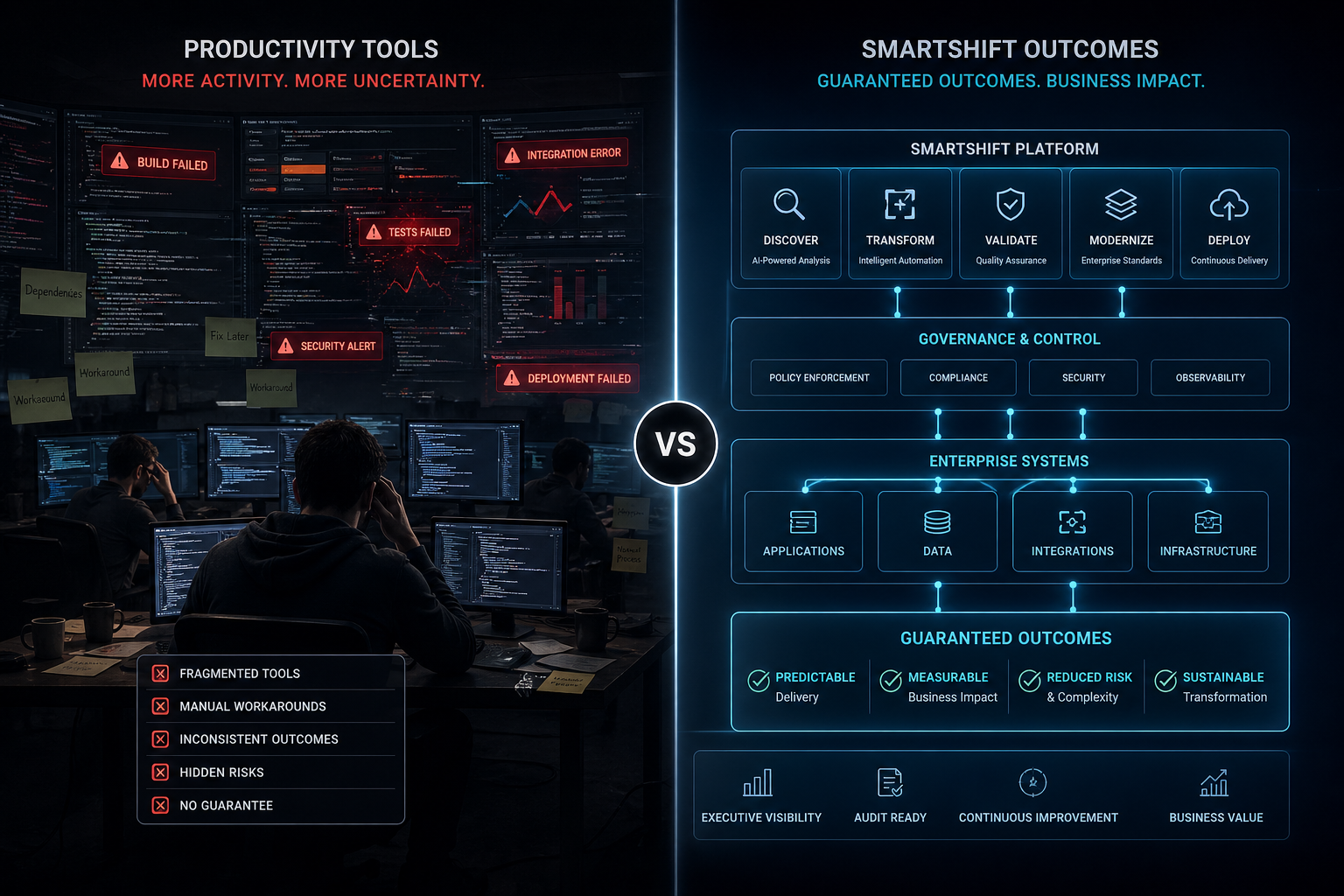
From there, smartShift helps enterprises automate SAP custom code analysis, transformation, optimization, validation, decommissioning insights, dual maintenance, and ongoing lifecycle management. The goal is predictable delivery, reduced risk, and a cleaner SAP custom code environment that can support future upgrades, clean core initiatives, and business change.
FAQs
What is SAP custom code lifecycle management?
SAP custom code lifecycle management is the ongoing discipline of analyzing, transforming, optimizing, validating, securing, and governing custom ABAP code across the life of an SAP environment.
Effective SAP custom code lifecycle management helps organizations understand which custom code exists, which code is still in use, what creates risk, what should be modernized, and what may be a candidate for retirement.
Why is visibility into SAP custom code important?
Visibility into SAP custom code is important because organizations cannot confidently transform, secure, or govern code they do not fully understand. Many SAP environments include decades of custom objects, missing documentation, hidden dependencies, and unused code that still adds cost and risk.
A complete view of the custom code landscape helps IT and business leaders identify usage, risk, technical debt, optimization opportunities, and modernization priorities before making transformation decisions.
How do mergers and acquisitions affect SAP custom code?
Mergers, acquisitions, carve-outs, and consolidations can significantly increase the complexity of SAP custom code. When organizations combine, split, or rationalize SAP systems, IT teams often need to reconcile regional variants, duplicated logic, localized requirements, and hidden technical dependencies.
Without automated analysis, teams may struggle to determine which code should move forward, which code should be retired, and which dependencies must be preserved to avoid business disruption after go-live.
How does automation improve SAP custom code lifecycle management?
Automation improves SAP custom code lifecycle management by replacing manual guesswork with repeatable, data-driven analysis and transformation. It helps teams assess large SAP custom code landscapes faster, identify issues more consistently, reduce human error, and make lifecycle decisions based on usage, dependency, and risk data.
With smartShift, organizations can automate SAP custom code analysis, transformation, optimization, validation, decommissioning insights, security remediation, and synchronization across major SAP initiatives. This supports broader coverage, more predictable delivery, and a cleaner, more governable SAP environment.
What is dual maintenance during an SAP transition?
Dual maintenance is the process of keeping changes in a legacy SAP environment aligned with changes in a new SAP landscape during a transition, such as an ECC to S/4HANA conversion. Without dual maintenance, teams often face long code freezes because ongoing business changes are difficult to synchronize with the project system.
smartShift Dual Maintenance helps keep ECC production development and the S/4HANA project landscape in sync, so organizations can continue business-as-usual development while preparing for go-live.
How can organizations maintain security and compliance in SAP custom code?
Organizations can maintain security and compliance in SAP custom code by integrating risk detection, documentation, remediation, validation, and governance into the lifecycle management process.
smartShift supports this approach by analyzing and transforming custom code with compatibility, performance, security, stability, modernization, and maintainability requirements in mind. This helps organizations reduce vulnerabilities, improve auditability, and maintain a cleaner custom code environment across future upgrades, clean core initiatives, and business changes.
Christopher Hanshew is Vice President of Product at smartShift and a recognized subject-matter expert in SAP ABAP custom code modernization and SAP Clean Core transformation. With decades of hands-on experience across SAP product strategy, solution architecture, and enterprise transformation, Chris leads the development of smartShift’s AI-powered automation-driven solutions that help organizations modernize, optimize, and future-proof their SAP ABAP custom code. His background spans product leadership, consulting, and large-scale SAP programs, giving him a practical, real-world perspective on what it takes to modernize complex SAP landscapes without disrupting the business. Chris regularly shares insights on ABAP modernization, Clean Core alignment, and upgrade readiness, helping SAP leaders make confident, data-driven decisions as they prepare for S/4HANA and beyond.