Clean Core Extensibility in SAP S/4HANA: Best Practices for Sustainable Innovation
August 3rd, 2026
6 min read

Introduction
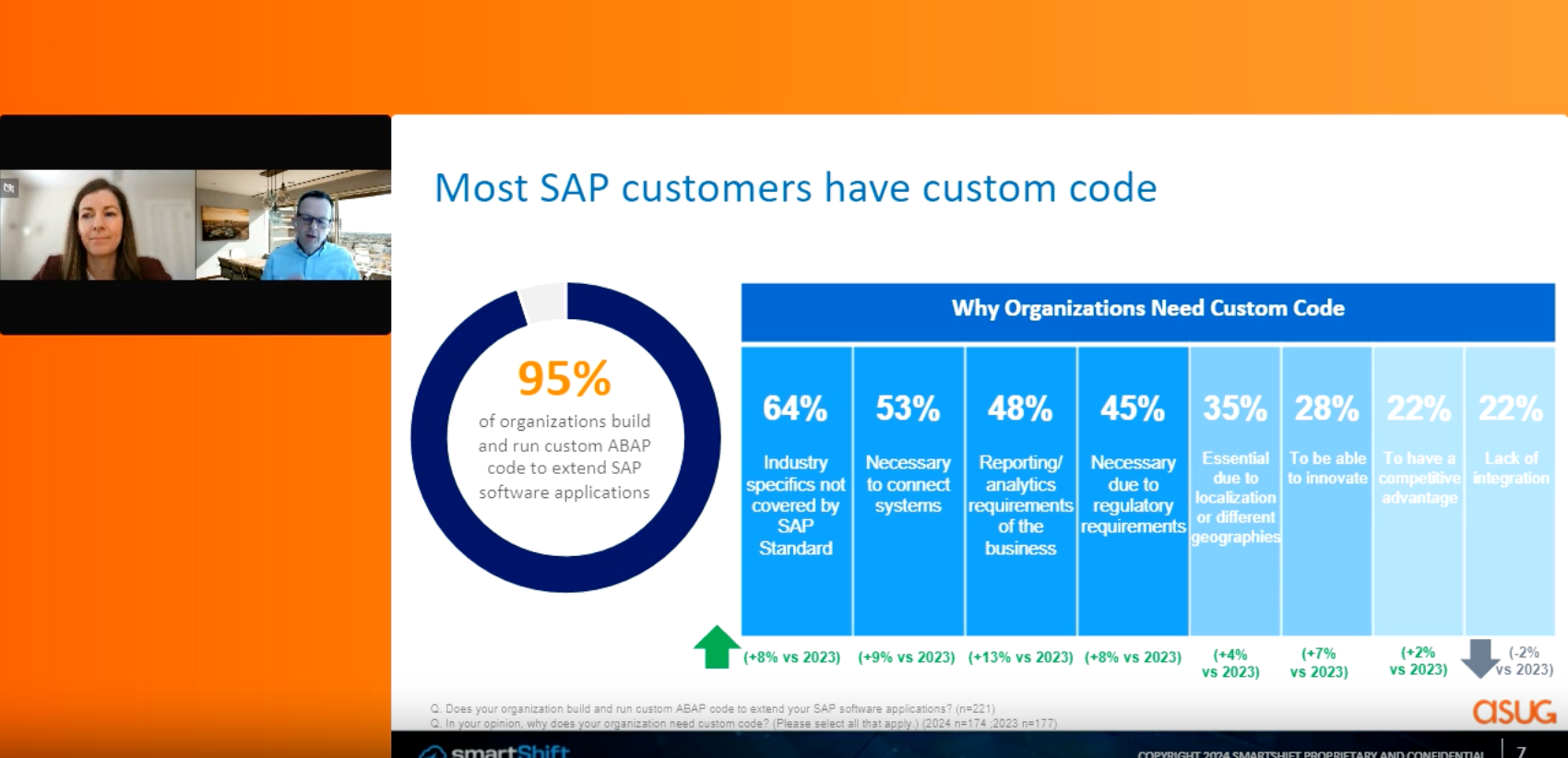
Most SAP environments carry decades of custom code. Some of that code supports business-critical processes, competitive differentiation, regional requirements, regulatory needs, integrations, and reporting. Some of it no longer serves a purpose. Much of it sits somewhere in between, with unclear ownership, missing documentation, hidden dependencies, and unknown risk.
Existing custom code matters when organizations move to SAP S/4HANA Cloud or begin working toward a cleaner core. SAP clean core extensibility gives organizations a way to extend SAP S/4HANA without modifying the core system. Released APIs, approved extension points, SAP BTP, ABAP Cloud, and side-by-side development all play important roles.
The challenge for most enterprises starts earlier.
After an organization defines its future-state extensibility standards, it needs to understand how the existing custom code estate aligns with that direction. Without that visibility, teams risk building new clean core extensions on top of an unmanaged legacy foundation. They may also carry obsolete code forward, preserve avoidable technical debt, or treat SAP clean core extensibility as a design principle for future development rather than an operational discipline across the full custom code lifecycle.
Clean core extensibility for SAP S/4HANA Cloud depends on how organizations continuously analyze, simplify, modernize, transform, and govern custom code, so the SAP environment remains stable, upgrade-ready, and open to future innovation.
In this article, we will explain how SAP clean core extensibility on S/4HANA Cloud works, why existing custom code must be part of the conversation, and how enterprises can move from clean core theory to practical execution.
Key Takeaways
Extensibility standards come first. Organizations should define future-state standards based on SAP’s strategy, apply those standards to new development, and then evaluate the existing custom code estate against that model.
Clean core extensibility requires both governance and architecture. Released APIs, approved extension points, SAP BTP, and ABAP Cloud help reduce upgrade risk. Long-term success also depends on consistent rules, automated analysis, remediation, decommissioning, and lifecycle management.
Repository simplification is a more practical goal than eliminating customization. Custom code is not automatically bad. Many customizations exist because SAP standard did not originally support a business requirement. The better goal is to reduce what no longer serves a purpose, modernize what must stay, and move necessary custom logic into cleaner, more upgrade-safe patterns.
ATC supports clean core governance, while enterprise execution requires deeper codebase intelligence, dependency mapping, usage analysis, automated transformation, decommissioning insight, and predictable outcomes.
Automation is required at enterprise scale. Clean core extensibility becomes difficult to sustain when teams rely on manual, object-by-object review across thousands of custom objects. Automation helps organizations analyze, remediate, optimize, and govern the full custom codebase with consistency and speed.
What Is SAP Clean Core Extensibility?
SAP clean core extensibility is the approach to adding business-specific functionality to SAP S/4HANA without modifying standard SAP code. The goal is to preserve upgradeability by using released APIs, approved extension points, cloud-ready development models, and decoupled architectures.
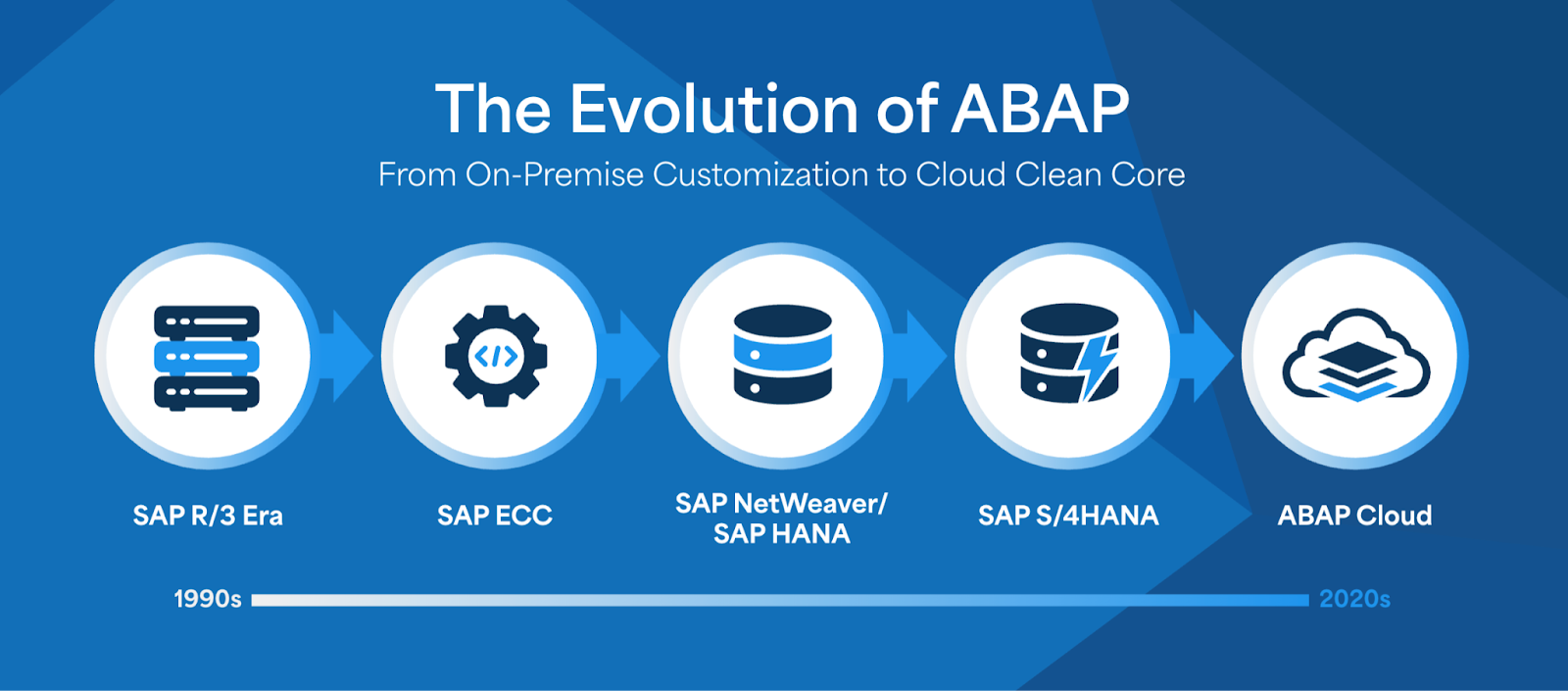
In ECC environments, custom code was often embedded deep inside standard transactions, tables, reports, enhancements, and interfaces. That approach solved real business problems at the time. Many organizations built custom logic because SAP standard did not yet support their specific processes, geographies, regulations, integrations, or industry requirements.
Over time, those decisions created complex custom code estates. A small customization added years ago may now feed a reporting process, trigger an approval workflow, support an integration, drive pricing logic, or provide data to another system. A change to one object can affect many others.
SAP clean core extensibility on S/4HANA Cloud changes the development model. Extensions should be designed to avoid tight coupling with the core. SAP BTP, ABAP Cloud, key user extensibility, developer extensibility, released APIs, and side-by-side development all support that direction.
The important point is that clean core extensibility does not mean all customization goes away. Customization remains necessary for many organizations. The goal is to make custom functionality more transparent, more governable, more upgrade-safe, and better aligned with SAP’s architecture.
For smartShift, clean core extensibility is part of a broader custom code lifecycle discipline. Organizations need to understand the custom code they already have, simplify the repository where possible, modernize what must remain, and govern future development so that new technical debt does not continue to accumulate.
Why SAP Clean Core Extensibility Starts With Standards and Code Visibility
Many clean core discussions begin with future-state architecture. That is the right place to start. Organizations first need to define extensibility standards based on SAP’s strategy, including when to use SAP BTP, ABAP Cloud, key user extensibility, developer extensibility, released APIs, approved extension points, or other approved patterns.
Once those standards are defined, teams need to stop new technical debt from entering the system. New development should follow the future-state extensibility model wherever feasible, with clear governance for exceptions.
Existing custom code then needs to be evaluated against that future-state standard. Most enterprise SAP environments contain years or decades of custom development. Some objects are actively used every day. Some are rarely used but still support compliance, regional processing, or period-end work. Some are technically obsolete. Some contain security risks, performance issues, hard-coded assumptions, outdated syntax, or dependencies that make upgrades more difficult.
A clean core strategy cannot be built on guesswork. Before organizations decide what to redesign, replatform, retain and adapt, or retire, they need codebase-level intelligence.
Codebase-level intelligence should include custom object inventory, usage data, dependency mapping, S/4HANA compatibility findings, HANA performance opportunities, security and stability risks, ABAP modernization needs, ABAP Cloud readiness indicators, and decommissioning candidates.
Without codebase-level intelligence, teams may make clean core decisions one object at a time. Object-level review can miss downstream impact. It can also create inconsistent decisions across teams, regions, or implementation partners.
Repository simplification gives organizations a practical way to close the gap between the current custom code estate and the future extensibility model. The goal is to reduce unnecessary custom code, keep business-critical logic where it still adds value, and modernize that logic to support the future SAP environment.
Managing SAP Clean Core Extensibility as a Continuous Lifecycle
Clean core extensibility for SAP S/4HANA Cloud requires an operating model that runs continuously across new development, existing custom code, technical debt, and future upgrades. The goal is to keep the extension landscape aligned with SAP’s strategy while the business continues to change.
Define and enforce future-state extensibility standards
Organizations should define when teams use SAP BTP, ABAP Cloud, key user extensibility, developer extensibility, released APIs, approved extension points, and exception paths. New development should follow those standards wherever feasible so new technical debt does not enter the system.
Maintain visibility into the custom code repository
Teams need an ongoing view of custom object inventory, usage, dependencies, S/4HANA compatibility, performance, security, stability, modernization, ABAP Cloud readiness, and decommissioning candidates. Repository visibility supports lifecycle decisions before, during, and after conversion.
Monitor for retirement and decommissioning opportunities
Unused or low-use custom code should be reviewed continuously because code that no longer supports an active process increases maintenance effort, testing scope, security exposure, and upgrade complexity. Decommissioning decisions should use usage insights, dependency analysis, business review, and a controlled path for reactivation when business needs change.
Modernize custom code that continues to support the business
Business-critical custom logic should be remediated, optimized, and modernized to operate reliably in SAP S/4HANA. Modernization may address compatibility, performance, security, stability, maintainability, syntax modernization, and ABAP Cloud readiness.
Apply the right lifecycle path
Clean core decisions should be made through a structured portfolio lens. Some processes may need to be redesigned because SAP standard or new SAP capabilities provide a better path. Some logic may be replatformed to SAP BTP or another external platform. Some business-critical logic may need to be retained and adapted inside SAP S/4HANA. Some code can be retired because it no longer serves a purpose.
Use automation to keep the lifecycle governed
At enterprise scale, clean core extensibility cannot depend on manual object review or inconsistent interpretation across teams, regions, and partners. Automation helps organizations apply standards, analyze the repository, remediate and optimize code, support decommissioning decisions, and govern custom code continuously.
Why ATC Alone Is Not Enough for Clean Core Governance
ABAP Test Cockpit, or ATC, is an important SAP tool for checking ABAP code quality and compliance. ATC can help teams identify issues and enforce standards during development. It belongs in the clean core governance conversation.
ATC should not be treated as the complete governance model.
ATC can flag findings, but findings are not the same as outcomes. A list of issues does not automatically tell an organization what code is still used, what dependencies exist, which objects can be decommissioned, which findings should be remediated together, or how the full custom codebase should move toward clean core patterns.
The distinction between findings and outcomes matters. The harder work is turning ATC findings into a predictable transformation path. Enterprise teams need to understand scope, impact, risk, remediation strategy, technical dependencies, business continuity requirements, and the effort required to keep systems aligned through change.
ATC can support clean core governance by identifying standards violations. smartShift goes further by helping organizations analyze, remediate, optimize, decommission, synchronize, and manage SAP custom code across the lifecycle.
How smartShift Helps Operationalize Clean Core Extensibility
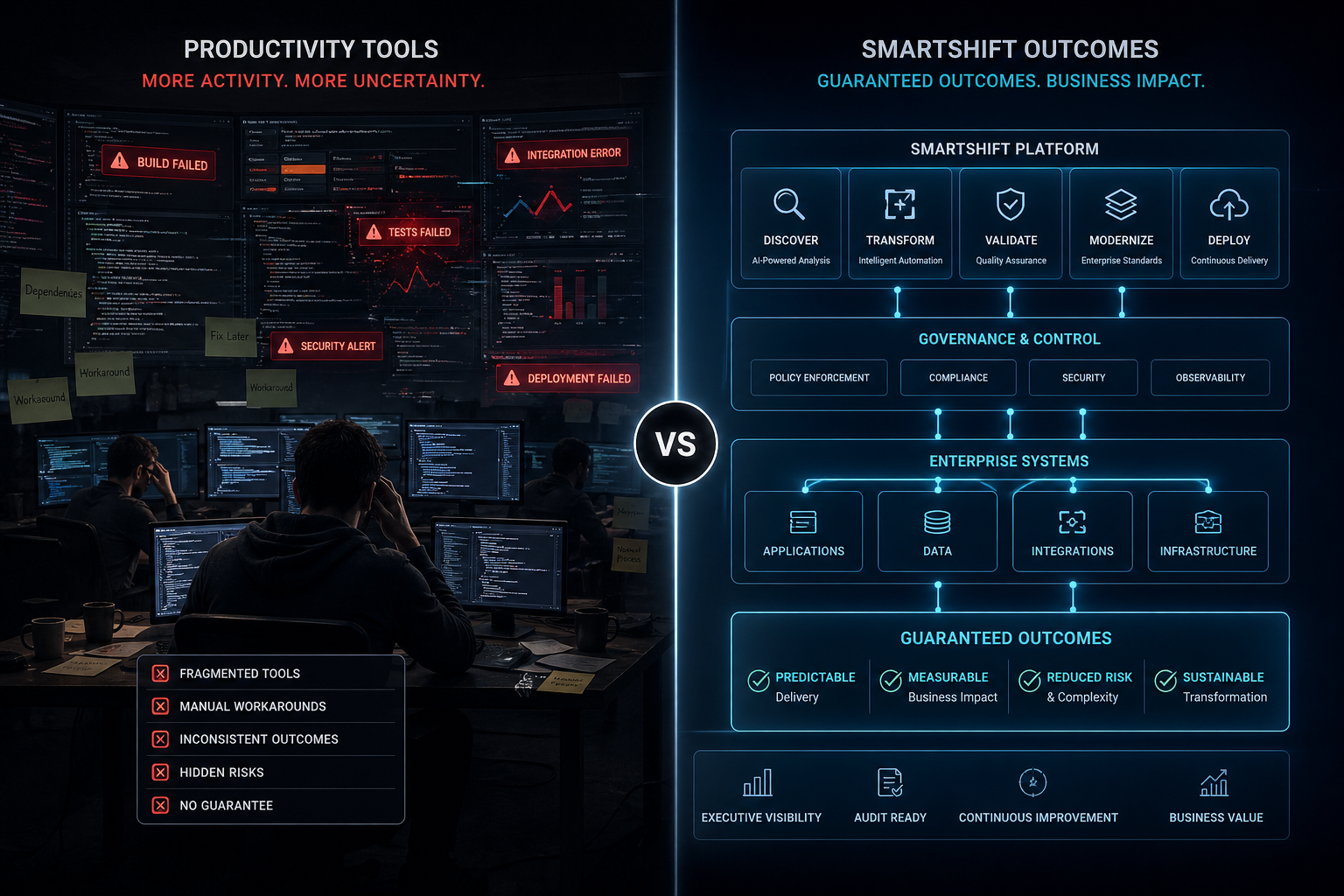
SAP provides the principles, models, and architecture direction for clean core extensibility. smartShift helps enterprises make that direction actionable across complex, customized SAP environments.
smartShift helps customers execute against SAP’s guidance in real-world environments where custom code estates are large, undocumented, business-critical, and constantly changing.
smartShift supports clean core extensibility through a lifecycle approach.
Code analysis provides visibility into inventory, usage, dependencies, compatibility findings, performance issues, security risks, and modernization opportunities.
Code transformation modernizes what must move forward by using automation to remediate, optimize, and validate custom code for S/4HANA compatibility, performance, security, stability, modernization, and maintainability at scale.
Code decommissioning reduces unnecessary complexity by helping teams identify unused custom code and support safe retirement decisions.
Automated dual maintenance protects business velocity by keeping business-as-usual and project landscapes synchronized during transformation.
Lifecycle management keeps the core cleaner over time by helping organizations manage custom code continuously after the initial transformation.
Summing Up
SAP clean core extensibility helps organizations extend SAP S/4HANA while protecting upgradeability, stability, and long-term innovation. Released APIs, SAP BTP, ABAP Cloud, approved extension points, and side-by-side development all support that goal.
The harder challenge is the custom code estate most enterprises already have. Years of business-critical ABAP, unused objects, hidden dependencies, undocumented logic, performance issues, security risks, and technical debt can make clean core goals difficult to execute.
A sustainable approach starts with visibility. Organizations need to understand what exists, what is used, what can be retired, what should be modernized, and what needs to move toward cleaner extension patterns.
Clean core extensibility becomes practical when it is supported by automated custom code analysis, transformation, optimization, decommissioning, dual maintenance, and lifecycle management.
Request a free SAP custom code analysis from smartShift to identify risk, uncover simplification opportunities, and build a practical path toward a cleaner SAP environment.
Christopher Hanshew is Vice President of Product at smartShift and a recognized subject-matter expert in SAP ABAP custom code modernization and SAP Clean Core transformation. With decades of hands-on experience across SAP product strategy, solution architecture, and enterprise transformation, Chris leads the development of smartShift’s AI-powered automation-driven solutions that help organizations modernize, optimize, and future-proof their SAP ABAP custom code. His background spans product leadership, consulting, and large-scale SAP programs, giving him a practical, real-world perspective on what it takes to modernize complex SAP landscapes without disrupting the business. Chris regularly shares insights on ABAP modernization, Clean Core alignment, and upgrade readiness, helping SAP leaders make confident, data-driven decisions as they prepare for S/4HANA and beyond.
Topics: