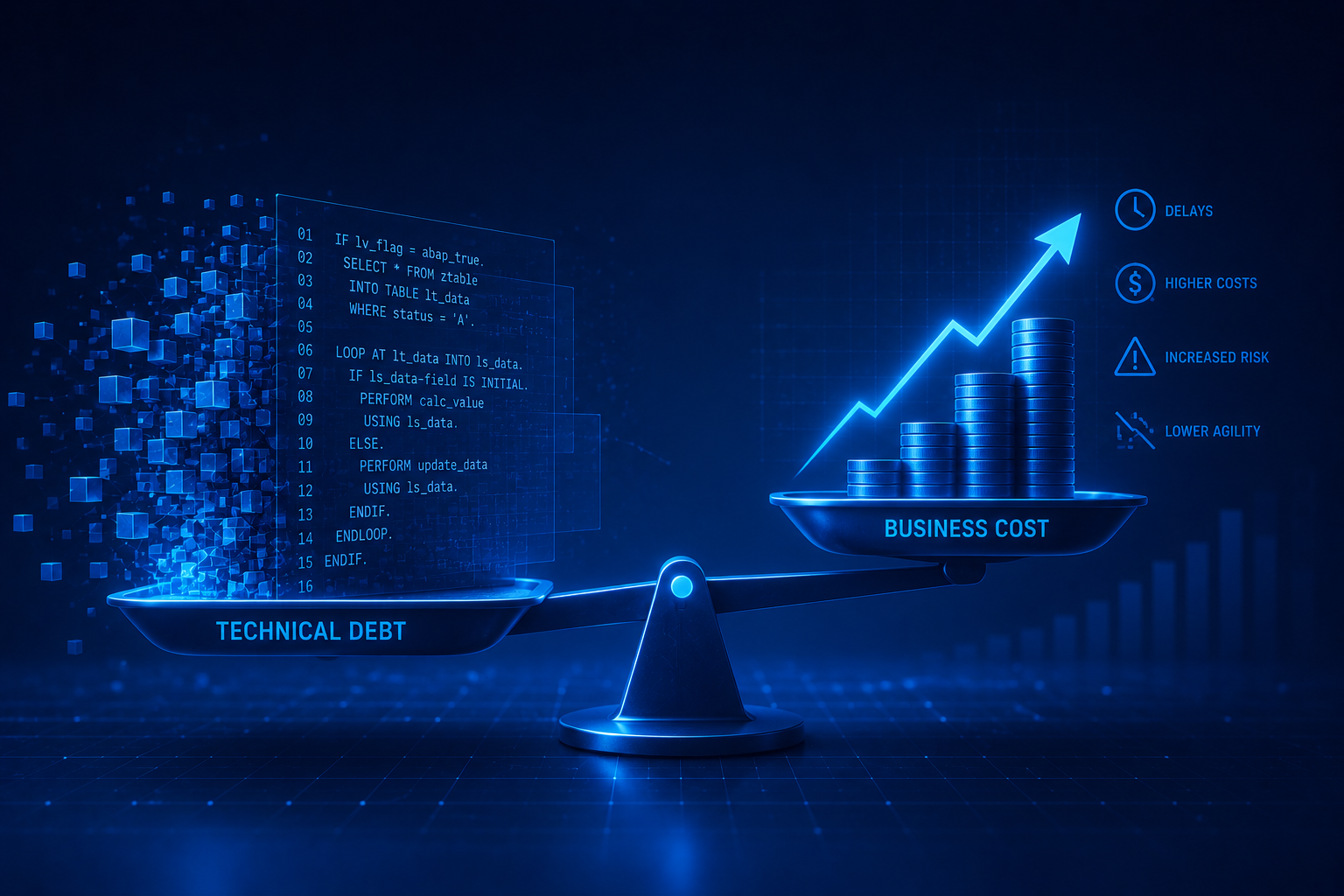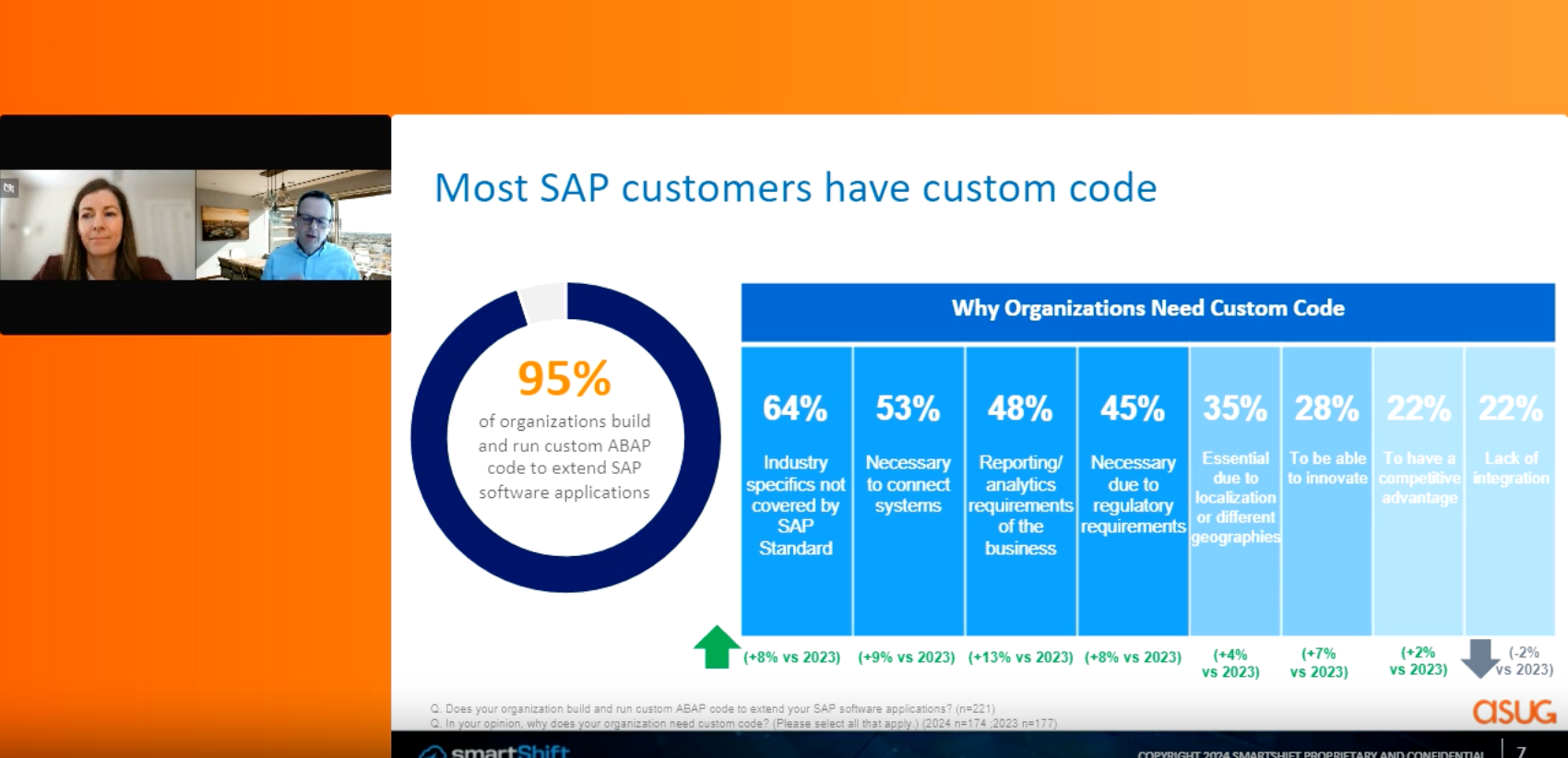
As the 2027 deadline for SAP ECC support approaches, organizations are under immense pressure to transition to SAP S/4HANA. However, decades of heavily customized legacy code stand in the way. The average SAP ECC system contains roughly 22,000 custom objects and 2.7 million lines of code. To avoid carrying this immense technical debt into the future, SAP has introduced the "Clean Core" paradigm. This guide explains exactly what a Clean Core is, breaks down the new extensibility tiers, and outlines a practical, automated path to achieving it.
What Exactly Is a Clean Core?
According to SAP, Clean Core is both a concept and an approach designed to achieve a modern, flexible, and cloud-compliant S/4HANA environment.
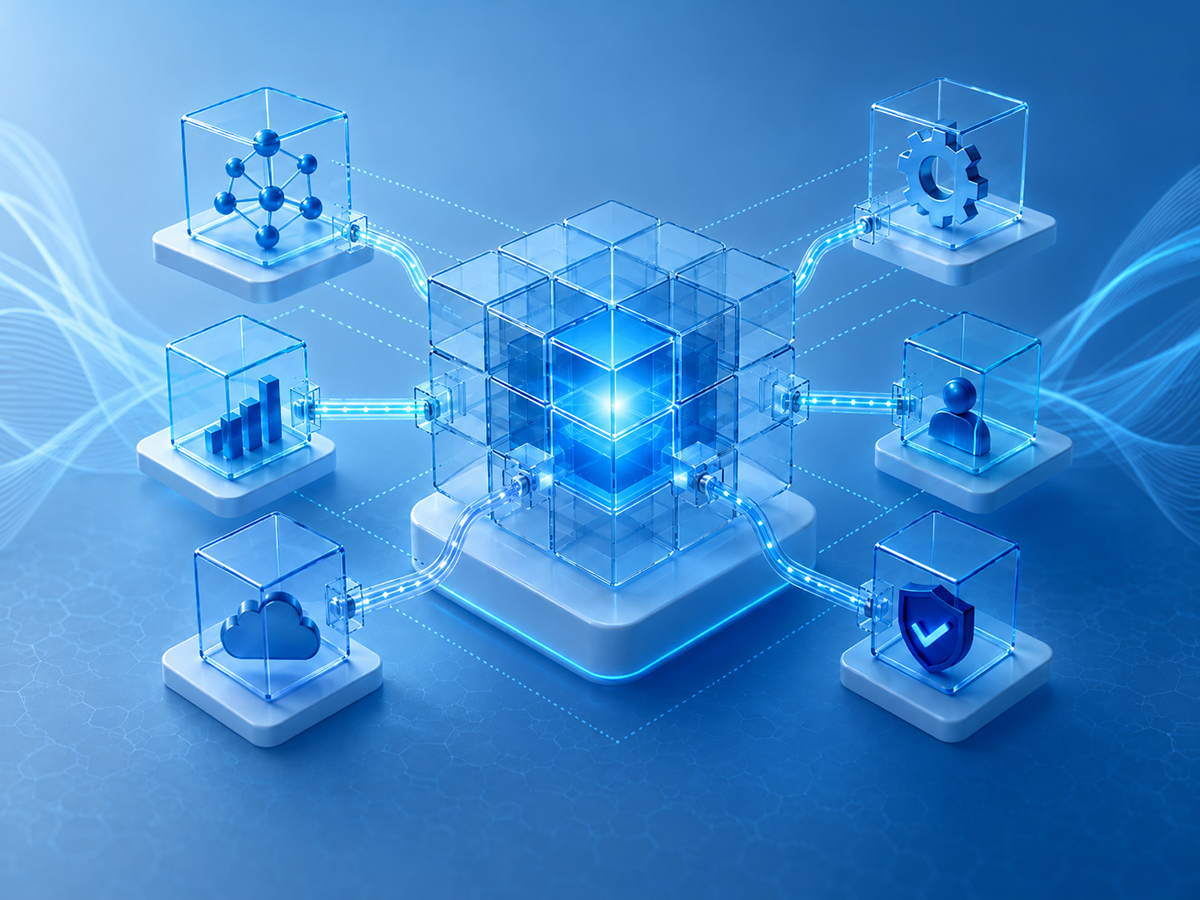
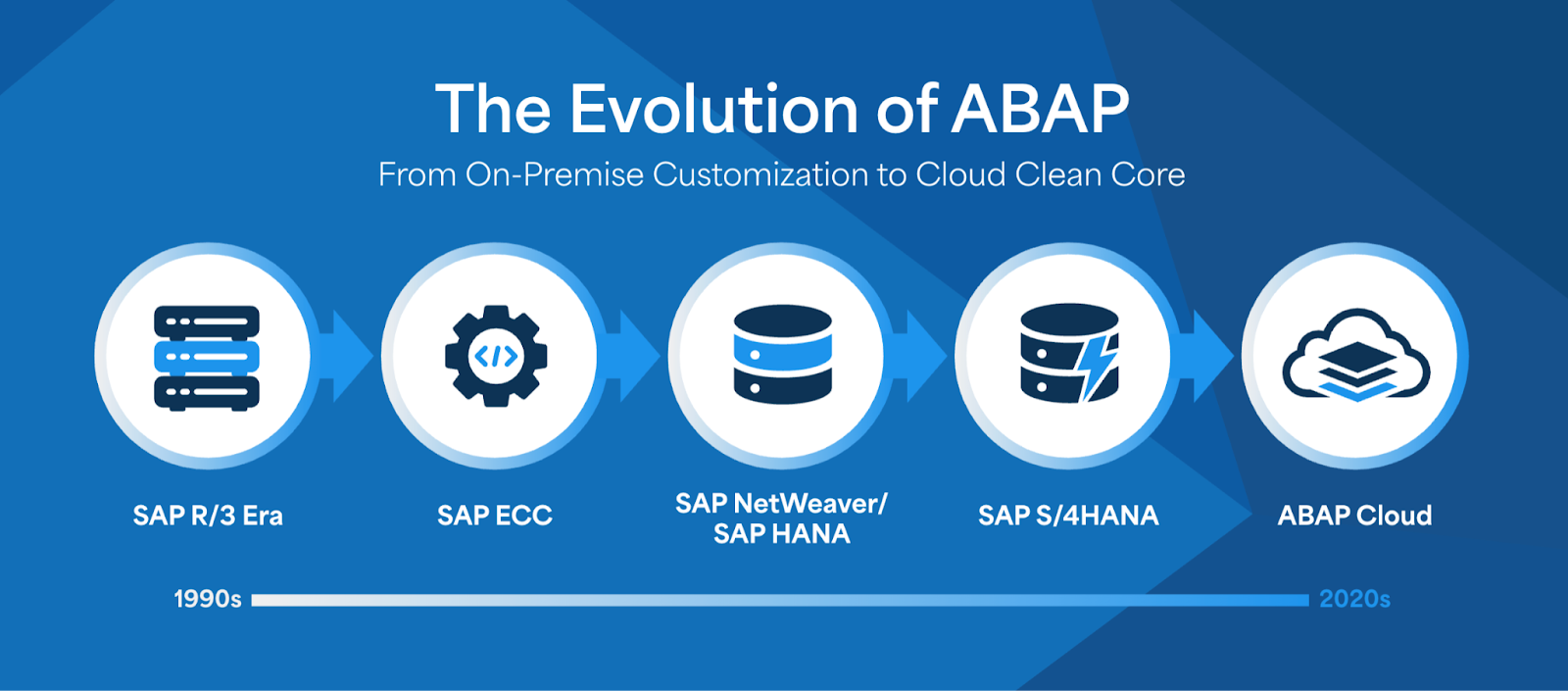
Historically, developers customized SAP by modifying the core system directly. While this solved immediate business needs, it created monolithic, tightly coupled systems that are exceptionally difficult to upgrade or extend. A Clean Core strategy dictates that all extensions must only interact with the SAP core through formally released extension points and APIs.
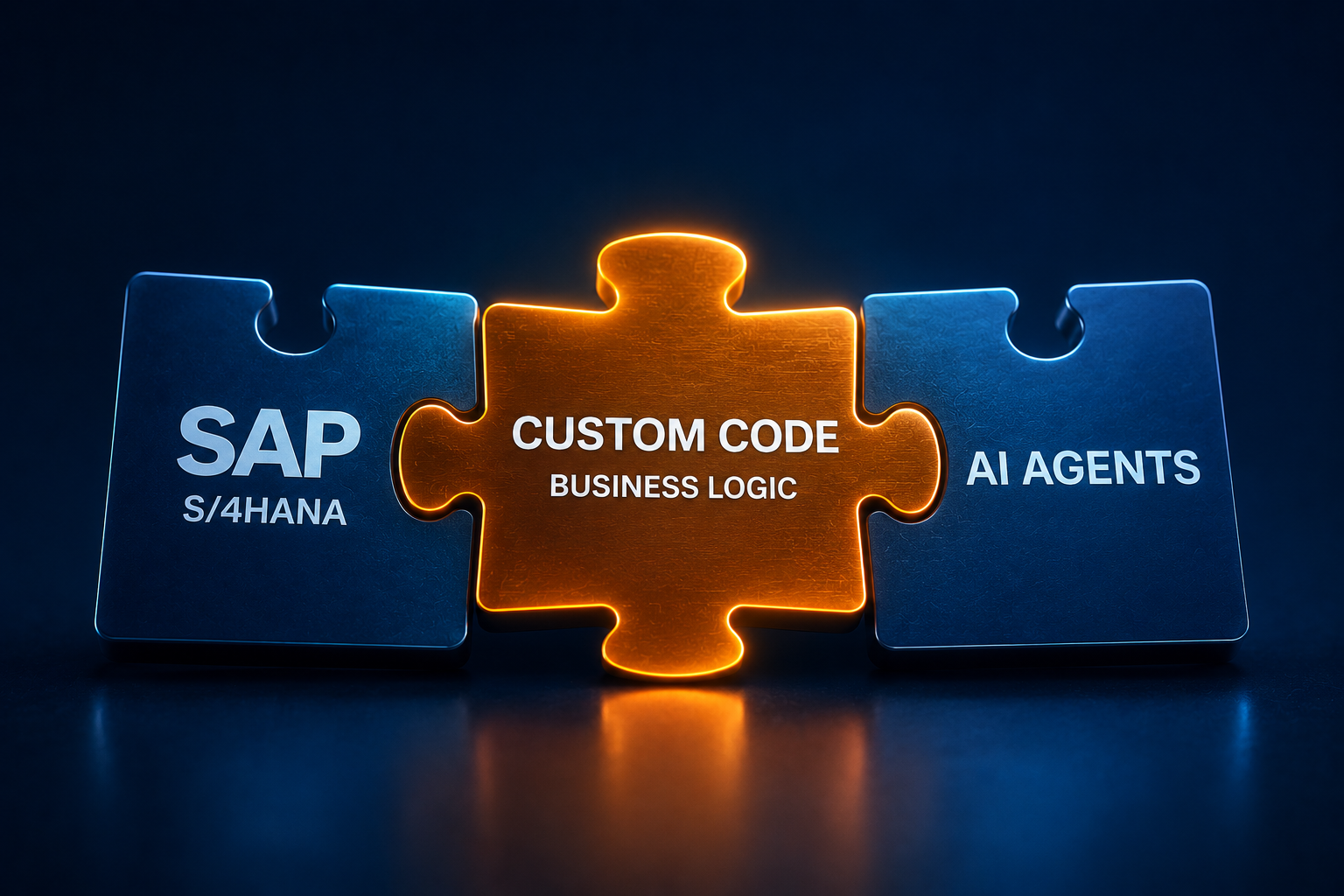
Furthermore, with the introduction of Agentic AI, a Clean Core is no longer optional—it is a prerequisite. True AI reliability relies on two foundational layers:
- Trusted Data: Unified master data and governed live access (an area SAP is heavily investing in).
- Trusted Logic: A modernized custom code layer that uses approved APIs rather than bypassing standard structures to read/write directly to the database.
If your custom code bypasses the standard APIs, AI agents cannot reason correctly, rendering your data foundation useless.
The Clean Core Extensibility Framework (Levels A to D)
To help organisations manage the transition of classic ABAP, SAP has established a structured framework that categorises custom code based on its upgrade stability. Understanding these levels is critical for your modernisation strategy:
- Level A (Cloud Ready): The gold standard. These are applications built using ABAP Cloud, Key User Extensibility, or side-by-side on the SAP Business Technology Platform (BTP), relying exclusively on released APIs.
- Level B (Upgrade Stable): Extensions that use well-defined classic APIs. While not formally released for public cloud development, SAP considers them stable for private cloud and on-premise environments.
- Level C (Conditional Clean Core): Code that SAP provides transparency for via change logs, but stability is not guaranteed in future upgrades (e.g., standard table reads).
- Level D (Not Clean Core): Legacy practices that violate Clean Core principles. This includes direct modifications, implicit enhancements, standard table writes, and classic BAdIs.
Your primary modernization goal is to identify Level D objects and systematically transition them to higher, more stable tiers.
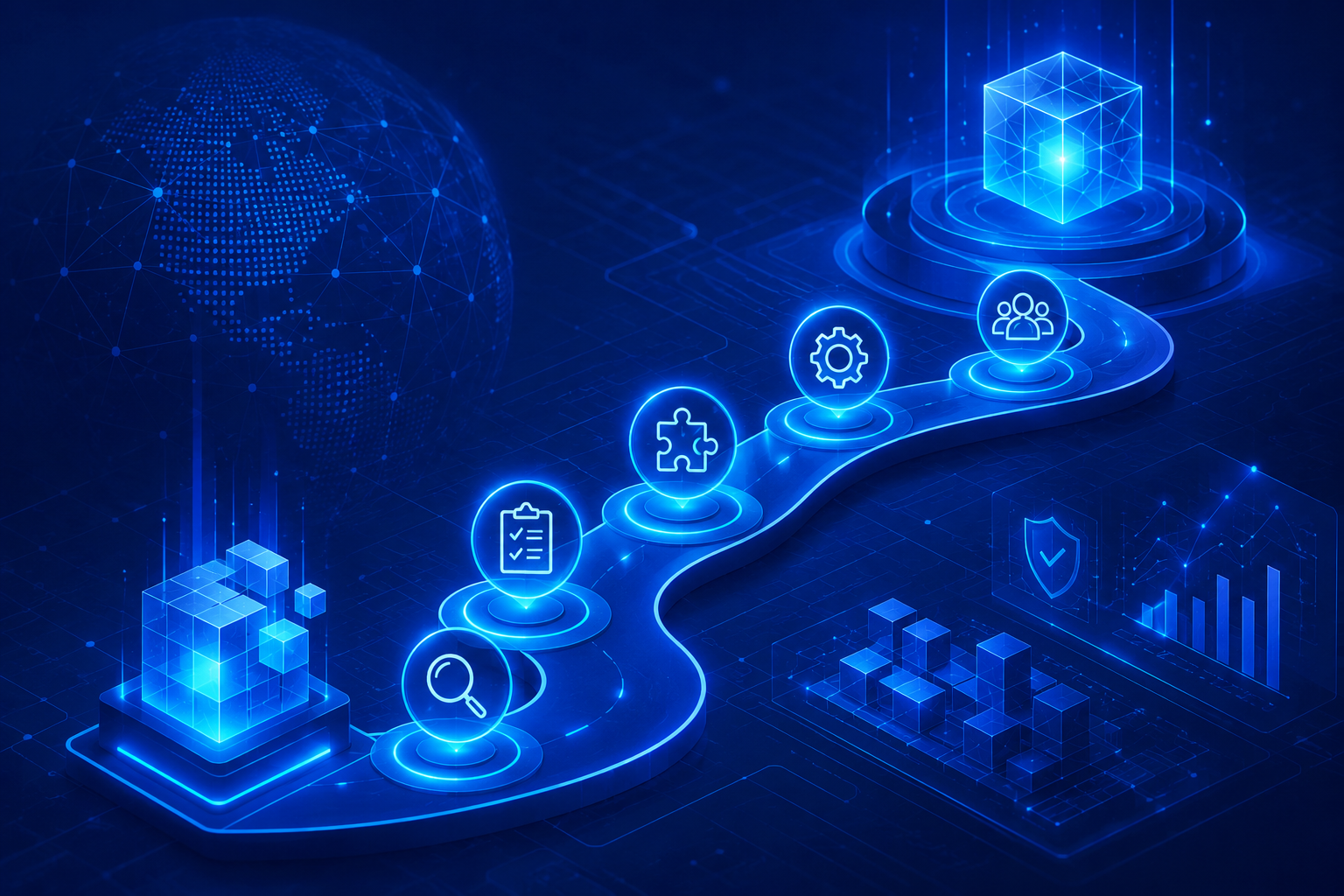
A Practical Guide: 3 Steps to Achieve a Clean Core
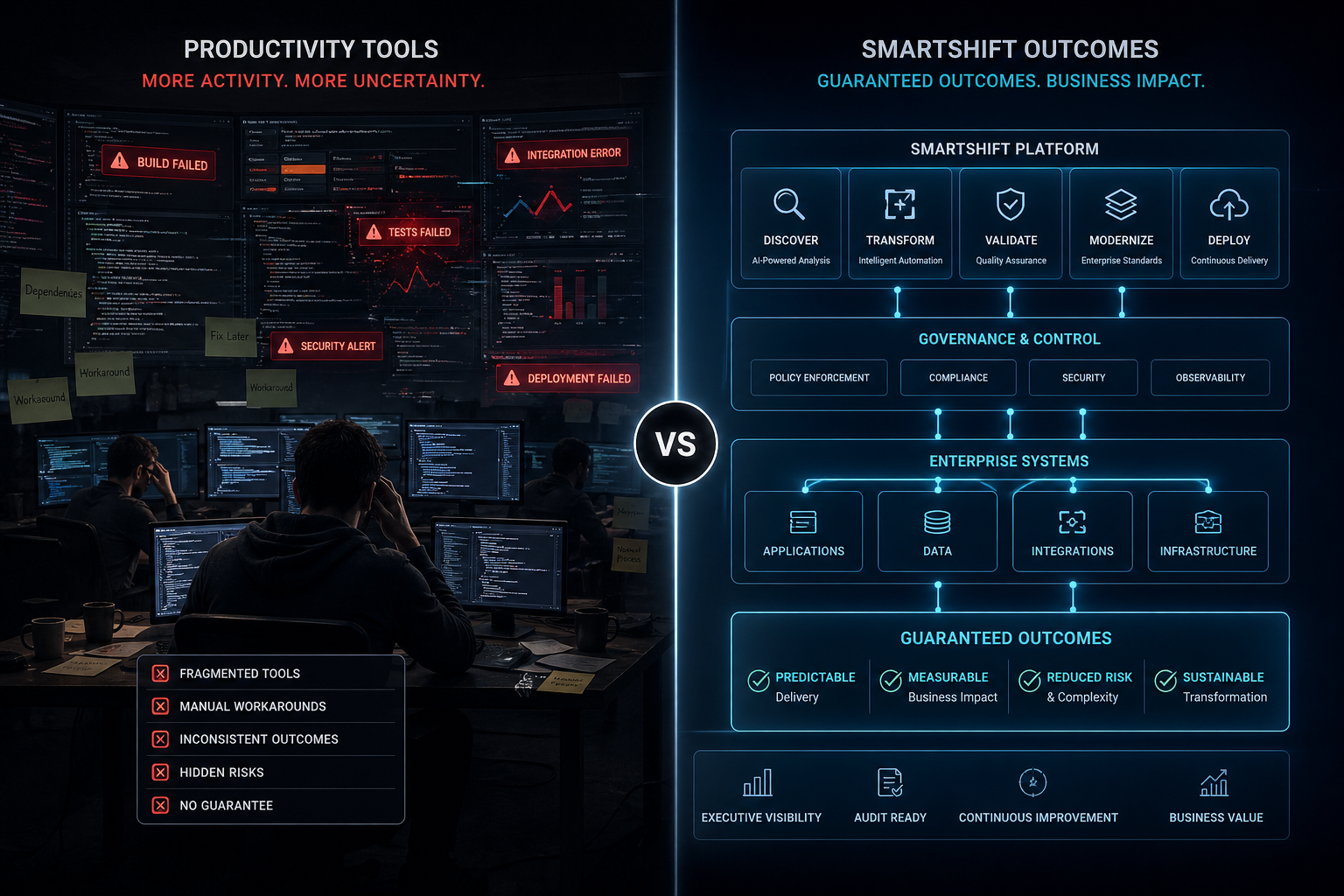
Reaching a Clean Core is not a flip-of-a-switch event; it is a continuous journey. Attempting to achieve this manually requires an unrealistic amount of labour and exposes the business to massive disruption. Here is how leading enterprises tackle it using outcome-based automation:
Step 1: Measure and Decommission "Dead Code"
Before you transform anything, you must clean the house. Based on industry benchmarks, 40% to 60% of the custom code in an average SAP repository is technically unused. By feeding historical SAP usage data (via tools like SCMON or UPL) into an intelligent automation platform, you can safely identify and decommission this obsolete code. Removing dead weight instantly reduces the scope of your Clean Core project.
Step 2: Analyze and Categorize the Repository
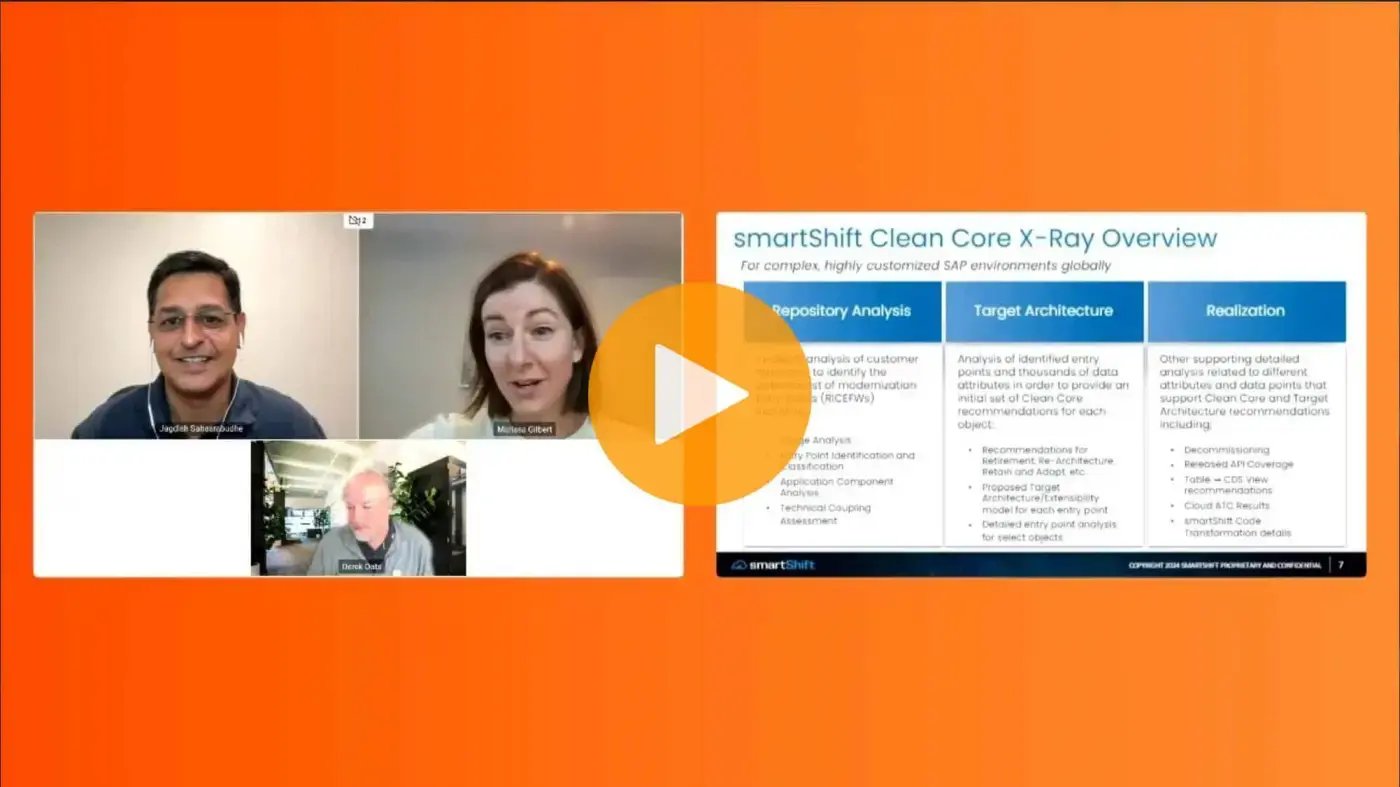
A flat list of objects is useless without context. An automated Clean Core Analysis parses your entire repository, grouping code into logical applications ("Entry Points") and mapping every single object against the Level A-to-D framework. This analysis provides a precise, data-driven roadmap, showing you exactly how many Level D issues (such as direct table updates) exist and must be remediated.
Step 3: Automate the Transformation
Instead of relying on manual developers to painstakingly rewrite code line-by-line, outcome-based automation applies hundreds of deterministic rulesets to transform the codebase at an industrial scale.
- It automatically replaces obsolete syntax and optimizes legacy database queries for HANA.
- It transforms classic BAdIs into modern Key User Extensibility frameworks.
- It applies Dual Maintenance, which continuously synchronizes new daily changes from your legacy ECC system into your S/4HANA environment—eliminating the need for risky code freeze
Conclusion: Stop Carrying Technical Debt
A Clean Core is the ultimate foundation for the future of your enterprise, ensuring you can seamlessly adopt SAP's latest innovations and unlock the power of Agentic AI. However, expecting manual development teams to rewrite decades of legacy ABAP is a strategy destined for budget overruns and project delays.
To protect your business velocity and secure guaranteed results, you must shift from manual remediation to deterministic automation.
Topics: