Every year, as the days begin to lengthen and the weather hints at spring, I pull my Brompton folding bike out from its winter hibernation. But for me this isn’t just about a casual ride around the lanes, it’s about preparing for something rather more eccentric: the Brompton World Championship.

If you’ve never seen it, it’s wonderfully British. Hundreds of riders line up on their Bromptons, many dressed in suits, ties, and occasionally some questionable tweed, before sprinting off on a folding-bike race that is equal parts competitive cycling and joyful absurdity. But before anyone can take part, there’s one critical moment: the start. All riders begin with their bikes folded and must unfold them before racing off.
That quirky start perfectly sums up the spirit of the event, but behind the humour, anyone who rides seriously knows the preparation matters. Before I even think about racing, I give my Brompton a careful once-over. I check the brakes, make sure the gears shift smoothly, inspect the tyres, and ensure every hinge and moving part of the fold works perfectly. On a bike with so many clever mechanisms, skipping that step would be asking for trouble halfway around the course.
In many ways, preparing an SAP system for transformation is remarkably similar.
Before you begin the journey to S/4HANA or any major modernization, you need to understand exactly what you’re working with. Just as my Brompton needs a thorough check before race day, your SAP environment needs a comprehensive custom code analysis to reveal what is still valuable, what needs attention, and what can safely be retired.
That’s where smartShift comes in. An automated SAP custom code analysis provides a deep evaluation of your legacy ABAP repository, identifying obsolete code, security vulnerabilities, and mandatory modernization changes. This critical first step minimizes risk, eliminates manual effort, and ensures that when you begin your transformation journey, you start with confidence, just like rolling up to the start line of the Brompton World Championship with a bike you know is ready for the race.
Why Guesswork Is Like Starting a Tour With Untested Brakes
Many organizations make the mistake of planning their S/4HANA journey based on flat spreadsheets or outdated system documentation. Relying on a traditional approach to evaluate millions of lines of custom code means complex HANA database impacts, Unicode compatibility issues, and deeply buried security vulnerabilities are easily missed.
If you do not objectively understand your code before you begin the migration, your new S/4HANA system will simply inherit the technical debt of your legacy environment.
The 3-Phase Approach to Automated Code Analysis
An automated SAP Custom Code Analysis breaks the "elephant" down into manageable, actionable pieces. The entire process is non-disruptive and is typically delivered in a simple three-phase approach over 2 weeks:
Phase 1: Initiation
The project begins with a kickoff workshop to align on technical prerequisites, system roadmap, and business drivers. Rather than extracting sensitive master data, the process relies on a secure Code Extractor that only pulls custom development objects and metadata. The smartShift Analysis Engine is then specifically configured to match your organization's naming conventions and target state.
Phase 2: Analysis
During this phase, our Intelligent Automation Platform executes a deep technical analysis utilizing its 250+ rulesets.
- Usage Data Integration: By analyzing up to 13 months of historical SAP usage data (via SUSG, SCMON, or UPL), the engine determines exactly what code is actively driving your business.
- S/4HANA Readiness: The platform incorporates SAP ATC (ABAP Test Cockpit) S/4HANA target variant reports to accurately map out required remediations.
Phase 3: Action Plan
A flat list of errors is not a strategy. The analysis culminates in a comprehensive workshop presenting an actionable implementation concept. You receive an SLA-backed plan and timeline detailing how you can achieve your recommended future state using automated code transformation.
What Does the Analysis Actually Uncover?
By running this sophisticated evaluation, IT leaders gain immediate visibility into three critical transformation areas:
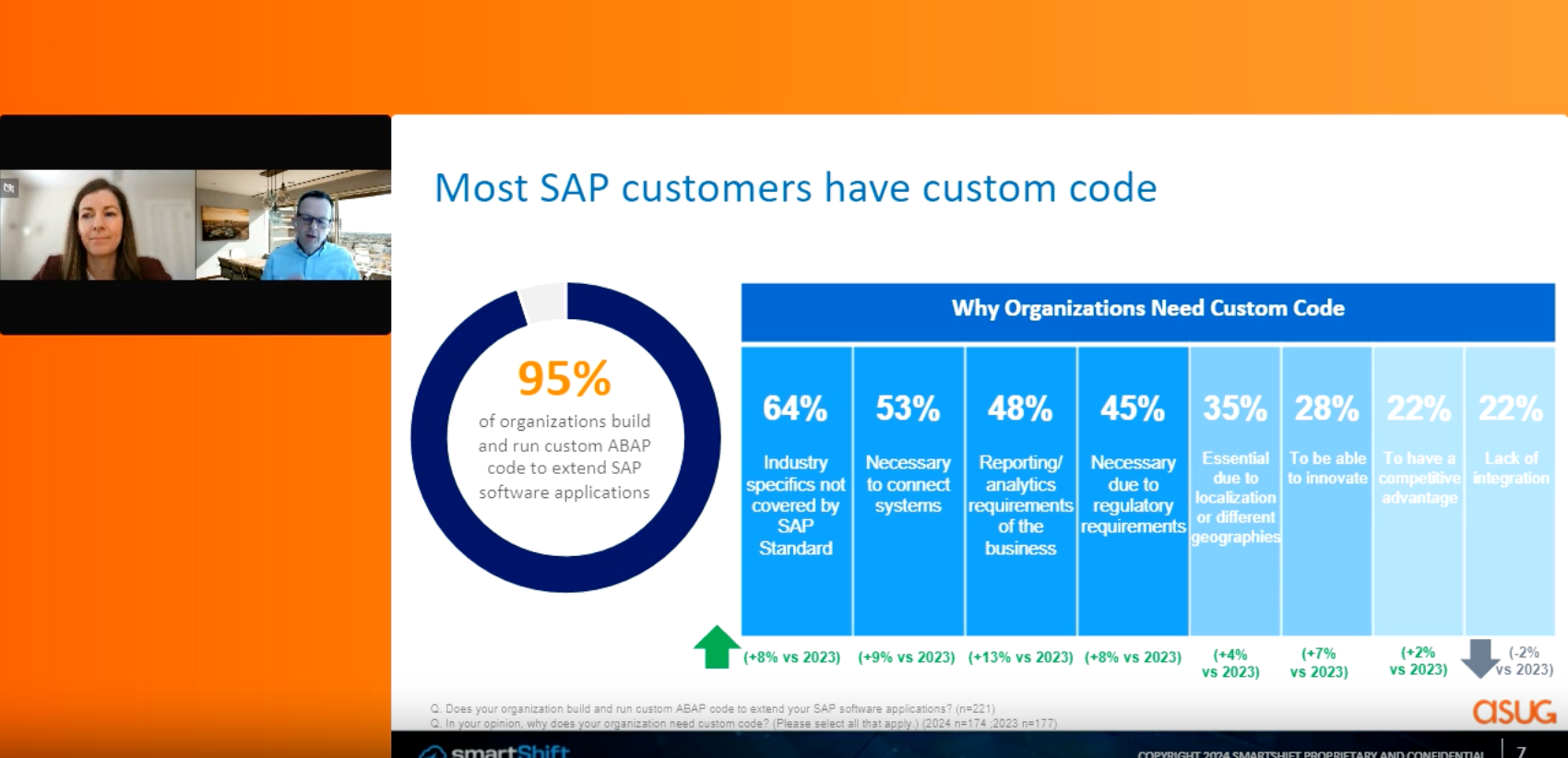
- Decommissioning "Dead Weight": Industry benchmarks show that up to 60% of custom code is technically unused. The analysis targets obsolete, unused, and duplicate code for safe removal, instantly reducing your testing and maintenance footprint.
- Mandatory Modernization: It flags exactly how many issues are tied to mandatory S/4HANA syntax changes, HANA DB compliance, and Unicode enablement.
- Risk Mitigation: The platform highlights critical security loopholes, performance bottlenecks, and stability risks, ensuring your modernized code is highly resilient.
Conclusion: Stop Guessing, Start Planning
Starting an S/4HANA transformation without understanding your custom code is like starting a long bike tour without checking the brakes, gears, or tires. Before tying up your internal IT teams or hiring System Integrators for months of manual refactoring, you need absolute clarity on the size of the challenge.
Stop guessing and start planning with real data. Contact us today to schedule your SAP Code Analysis and receive a clear, automation-backed strategy for your journey to a Clean Core.