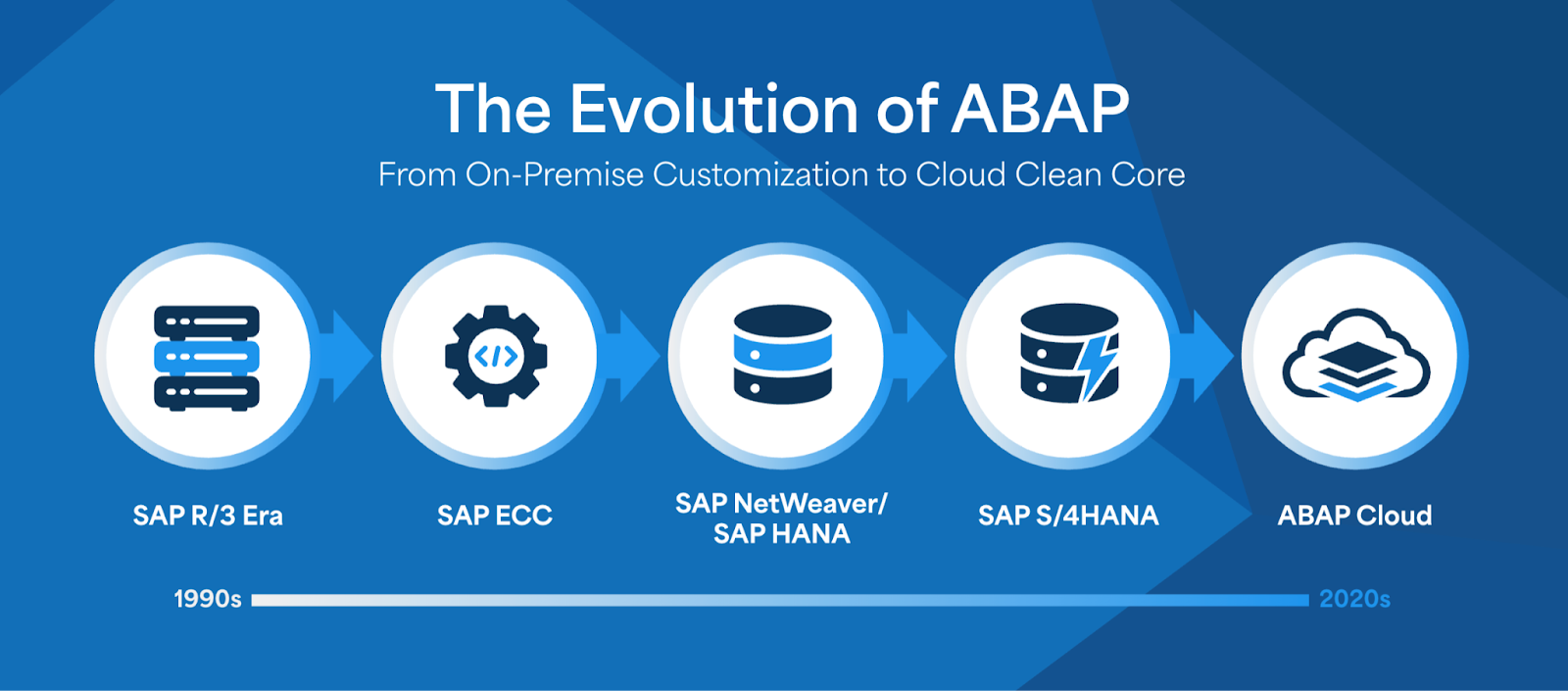
For enterprise IT leaders, the transition from SAP ECC to S/4HANA is rarely stalled by the "standard" SAP functionality. The friction almost always lies in the periphery: the decades of custom ABAP enhancements that run your unique business processes.
When millions of lines of code are involved, "standard" manual assessment methods often fail to reveal the true complexity of the landscape. To keep your migration on track, you need a diagnostic workflow that identifies bottlenecks before they become project-stopping issues.
Here is the step-by-step workflow to diagnose custom code bottlenecks and how smartShift automation transforms this process from a months-long burden into a streamlined certainty.
Step 1: Beyond the Surface – Full Spectrum Discovery
Most SAP program teams begin with basic SAP Readiness Checks or Code Inspectors. While useful for a high-level view, these tools often provide only partial visibility and can produce a lot of false positives. They identify that a problem exists but fail to quantify the exact effort required to fix it.
- The Bottleneck: Relying on "sampling" or high-level scans that miss deep dependencies, obsolete code, and complex process variants.
- The smartShift Advantage: Our Code Analysis solution provides full-spectrum visibility. We analyze 100% of your ABAP codebase—not just a sample—using 250+ AI-based transformation rules to uncover hidden technical debt and security risks that traditional scans miss.
Step 2: Categorize and Decommission Obsolete Code
Research shows that up to 50% of custom code in mature ECC landscapes is either unused or obsolete. Carrying this "ghost code" into S/4HANA inflates testing cycles and increases the total cost of ownership (TCO).
- The Bottleneck: Manual decommissioning is politically and technically difficult. SIs often take a "lift and shift" approach because they lack the tools to confidently identify what can be safely retired without breaking dependencies.
- The smartShift Advantage: We use data-driven insights to separate the core business logic from the noise. By identifying and safely eliminating obsolete code early, we significantly reduce the scope of the transformation.
Step 3: Assess Compatibility and Functional Gaps
S/4HANA introduces fundamental changes to the SAP data model. Custom code that references old, deprecated, or merged tables will break.
- The Bottleneck: In a traditional SI approach, developers must manually review every syntax error and data model conflict. This leads to unpredictable "Time & Materials" (T&M) costs and frequent project delays.
- The smartShift Advantage: Our platform doesn't just find these gaps; it understands the context. smartShift’s Intelligent Automation® maps ECC code to S/4HANA-compatible structures automatically, maintaining 99.99% accuracy across millions of lines.
Step 4: Address the "Dual Maintenance" Trap
One of the most common reasons S/4HANA migrations stall is the "code freeze". As the transformation project progresses, the business still requires changes and innovations in the active ECC production environment.
- The Bottleneck: Manually retrofitting ECC changes into the S/4HANA project landscape is a high-risk, labor-intensive process that often leads to "drift," system instability, and mid-project rework.
- The smartShift Advantage: We provide Dual Maintenance. Our platform automatically synchronizes custom code changes across both landscapes in real time, ensuring your S/4HANA environment remains upgrade-ready without requiring a business-crippling code freeze.
Comparison: Why Automation is the Only Path to Scale
| Transformation Phase | Traditional Approach | smartShift Platform |
| Scoping | Estimation based on samples; high risk of scope creep. | Deterministic analysis of 100% of code; fixed-price scoping. |
| Remediation | Manual "find and fix" by offshore developer teams. | AI-powered, enterprise-scale automated transformation. |
| Accountability | Best-effort delivery; risk sits with the customer. | Guaranteed outcomes with fixed timelines. |
| Code Quality | Variable based on individual developer skill. | Consistent, high-quality code aligned with Clean Core standards. |
Future-Proof Your Transformation
Identifying the code that stalls your migration is the first step toward a "Clean Core." By replacing manual effort with automated precision, you eliminate the primary source of project risk.
At smartShift, we’ve modernized over 3,300 SAP systems and transformed over 4 billion lines of code for the world’s most complex organizations. We don't just help your developers work faster; we transform your entire codebase into a stable, upgrade-ready asset.
Stop guessing your migration timeline. Start with visibility.
Explore how to future-proof your SAP custom code.