5 Keys from SAP Sapphire 2026: AI, Governance, Autonomous Enterprise
June 30th, 2026
4 min read
Key Takeaways
- SAP Sapphire 2026 positioned the Autonomous Enterprise as a major direction for SAP’s future, with SAP Business AI and AI agents becoming more central to SAP operations.
- SAP’s AI roadmap raises the bar for modernization readiness across ERP, data, integrations, governance, cloud strategy, and custom code management.
- AI agents need reliable data, governed processes, stable integrations, and trusted business logic before enterprises can rely on agent-driven execution at scale.
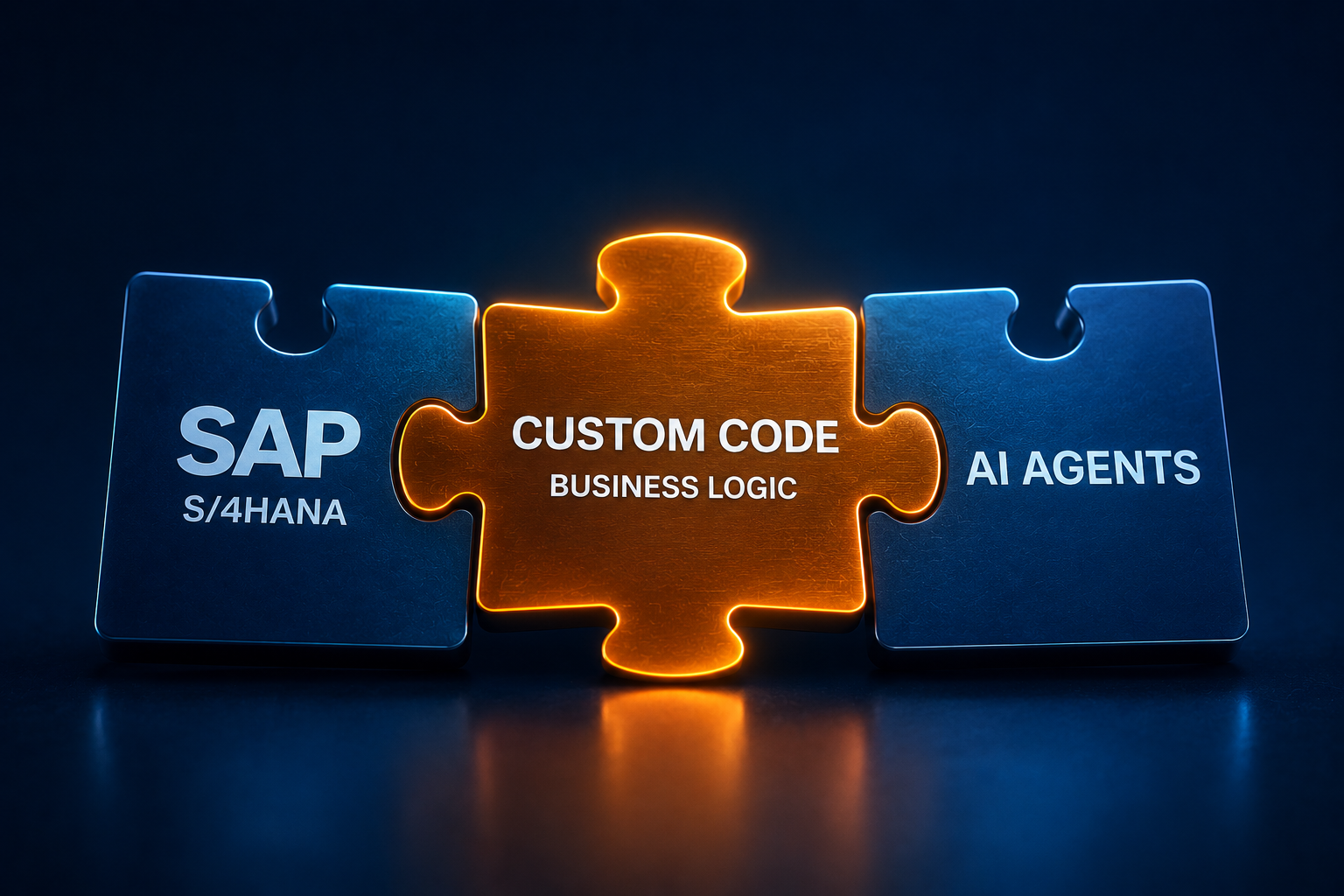
- Custom code matters because pricing rules, compliance checks, fulfillment logic, workflows, and other business-specific processes often live inside ABAP programs, user exits, Z-developments, and extensions.
- Clean core, repository simplification, and cloud readiness are becoming harder to postpone as SAP’s future AI capabilities depend on modern, connected, and controlled system foundations.
- Enterprise SAP leaders should evaluate AI readiness through governance, auditability, lifecycle control, and trust in the outcome, not only speed of adoption.
Introduction
SAP Sapphire 2026 placed Business AI, the Autonomous Enterprise, AI agents, governance, and cloud-led modernization at the center of SAP’s enterprise roadmap. SAP’s Sapphire announcements introduced a unified SAP Business AI Platform, SAP Autonomous Suite, Joule agents, and new transformation tooling designed to support AI-led operations across core business processes.
For SAP leaders, the real question is what those updates require from the systems already running the business. AI can help accelerate decision-making, automate work, and support more autonomous operations. Still, enterprise value depends on governed systems, clean data, controlled custom code, and landscapes ready for continuous change.
These SAP Sapphire 2026 key takeaways explain what enterprise leaders should watch next. The discussion connects SAP Sapphire takeaways to modernization, governance, upgrade readiness, and the smartShift view that AI-led SAP transformation starts with systems enterprises can trust at scale.
SAP Sapphire 2026: SAP’s Next Move Toward the Autonomous Enterprise
SAP used SAP Sapphire 2026 to move the ERP conversation toward a more autonomous operating model. The central theme was the Autonomous Enterprise, in which AI agents support, automate, and increasingly perform work across core business processes.
SAP’s direction was clear across its Business AI, Joule, AI agent, agent-building, and governance announcements. SAP is positioning AI closer to the systems, processes, and business data that drive daily operations. For enterprise SAP leaders, that direction changes how ERP strategy needs to be evaluated.
AI-led operations require more than access to new AI capabilities. They depend on the readiness of the full SAP environment, including:
- Reliable business data
- Governed processes
- Cloud-ready systems
- Visible and controlled custom code
- Modernization plans that support continuous change
The five SAP Sapphire 2026 takeaways that follow focus on what enterprise leaders should take from SAP’s direction and how to prepare SAP landscapes for AI-led transformation at scale.
Five Takeaways That Matter for Enterprise SAP Leaders
The most important SAP Sapphire 2026 key takeaways went beyond individual product announcements. Together, the SAP Sapphire announcements signaled a broader shift in how SAP expects enterprises to operate, modernize, and govern AI-enabled business processes.
The five takeaways that matter most for enterprise SAP leaders are:
- The Autonomous Enterprise became SAP’s core direction. SAP framed AI-led operations as the next major phase of enterprise software.
- Business AI expanded its portfolio of Joule assistants and agents. SAP plans to use these agents to support core processes across finance, supply chain, procurement, HR, and customer experience.
- Joule Studio made agent building a bigger part of the SAP roadmap. Enterprise teams and partners will have more tools to build AI agents, applications, and workflows.
- SAP AI Agent Hub emphasized governance and oversight. SAP is giving customers a way to discover, manage, and govern SAP and non-SAP agents.
- AI value became more dependent on cloud readiness, data quality, governance, and controlled modernization. SAP Sapphire 2026 autonomous enterprise AI depends on systems that are modern, connected, and controlled.
Each takeaway points to the same enterprise reality: AI-led SAP transformation requires readiness across the full SAP landscape.
What These Announcements Mean for SAP Modernization
The SAP Sapphire 2026 key takeaways point to a higher standard for modernization readiness. SAP’s AI roadmap places more pressure on enterprise systems to support reliable, governed, and scalable AI-led operations.
AI agents need strong foundations before they can support end-to-end business processes with confidence. Enterprise SAP environments must be prepared with:
- Reliable business data
- Clean process logic
- Stable integrations
- Governed system changes
- Controlled custom code
- Upgrade-ready architecture
Clean core and cloud readiness will become harder to delay as SAP’s future capabilities move deeper into AI, automation, and agent-driven processes. Enterprises that maintain legacy custom code, undocumented extensions, unclear business logic, or weak lifecycle management may struggle to adopt these capabilities at scale.
The buyer conversation is also becoming more mature. Enterprise leaders are moving from “Does it use AI?” to “Can we govern it, audit it, monitor it, and trust the outcome?”
For SAP leaders, SAP modernization now needs to account for the full system foundation. AI readiness depends on business logic, data, integrations, and custom code that can support trusted execution.
smartShift’s Perspective: AI-Led SAP Transformation Needs Control Over Custom Code
A key smartShift technical consideration is that SAP’s Autonomous Enterprise raises a practical question for enterprise leaders: What business logic will AI agents depend on?
Clean data matters, and trusted business logic matters just as much. In many SAP environments, pricing rules, compliance checks, fulfillment logic, reporting logic, approvals, and customer-specific workflows live inside years of custom code, integrations, user exits, Z-developments, and extensions.
If that logic is outdated, undocumented, or poorly transformed, AI agents may act quickly on flawed assumptions. The output may look correct until downstream issues appear in financial close, compliance review, fulfillment, or customer-facing operations.
Data migration focuses on moving, mapping, and validating business records. Custom code transformation requires understanding what ABAP programs, user exits, Z-developments, and modifications mean for the business. Custom code often carries institutional knowledge built over years, so enterprises need a governed way to decide what should be retired, re-platformed, redesigned, or retained and adapted.
The smartShift view is that AI-led SAP transformation requires speed with control. Enterprises need faster modernization, along with visibility into what changed, why it changed, and whether the result can be trusted for future SAP operations.
Conclusion
For enterprise SAP leaders, the takeaways from SAP Sapphire 2026 point to a practical requirement. AI readiness will depend on how well SAP landscapes are understood, governed, and modernized.
Business AI and the Autonomous Enterprise will require reliable data, controlled processes, clean integrations, and visible custom code. Custom code matters because it often carries the business-specific logic that future SAP AI agents may rely on, including pricing rules, compliance checks, approval workflows, fulfillment logic, and reporting logic.
Enterprise teams that cannot clearly see, govern, and modernize that logic may struggle to trust AI-led execution at scale. Enterprise teams that can govern their data, integrations, and custom code, and maintain a clean core strategy, will be better prepared to adopt future SAP capabilities with confidence.
Faster AI adoption has limited value without modernization work that is governed, auditable, and trusted.
As the Chief Technology Officer at smartShift, he brings over 25 years of experience in product strategy, SAP applications, and enterprise AI. Previously, he served as SAP's field CTO, where he worked with ISVs and channel partners to align complex technologies with market needs. He has earned multiple accolades, including the SAP Innovation Award (2005). His leadership roles across startups and large enterprises, along with recognition such as the Zinnov Start-up Beacon Award (2014), uniquely position him to drive innovation and growth at smartShift.
Topics: